Tête
Just the two of you.
Tête is a dating app for grown-ups who want something real. There are no photos and no swiping at first. People are matched on what matters to them, get to know each other by voice for six days while a photo reveals one piece at a time, and then meet over coffee. I designed separate experiences for women and men and built a working demo of both.


Women are tired of dating apps
I started by listening to women talk about dating online: in comment threads, Reddit posts and short videos, mostly from women in their 40s and 50s. The same complaints came up again and again. A “hey” is the whole first message. Men say they want something serious and turn out to want something casual. People disappear mid-conversation. Profiles get judged in a second by one photo. And scammers, who target exactly this age group.
Many of these women had simply stopped. Being single felt more peaceful than another round of the apps. Mainstream apps feel built for people in their 20s, and the sites made for older daters feel dated. Single moms added one more: the moment kids came up, the conversation was over.
Every complaint became a rule
I wrote down each complaint and designed one rule in the product that answers it. Low-effort messages: a man reaches out by answering one of her questions in his own voice. Mixed intentions: everyone states what they want, and it’s locked for the week. Ghosting: you can pause when life gets busy, but you can’t just vanish. Judging by looks: no photos at first, then a slow reveal. Scammers: ID and a live selfie for everyone, and nothing gets sent that asks for money or moves the chat to another app.
The whole product follows old-fashioned values on purpose: courtesy, honesty, and men making the first move.
Her flowThe splash: just the two of you
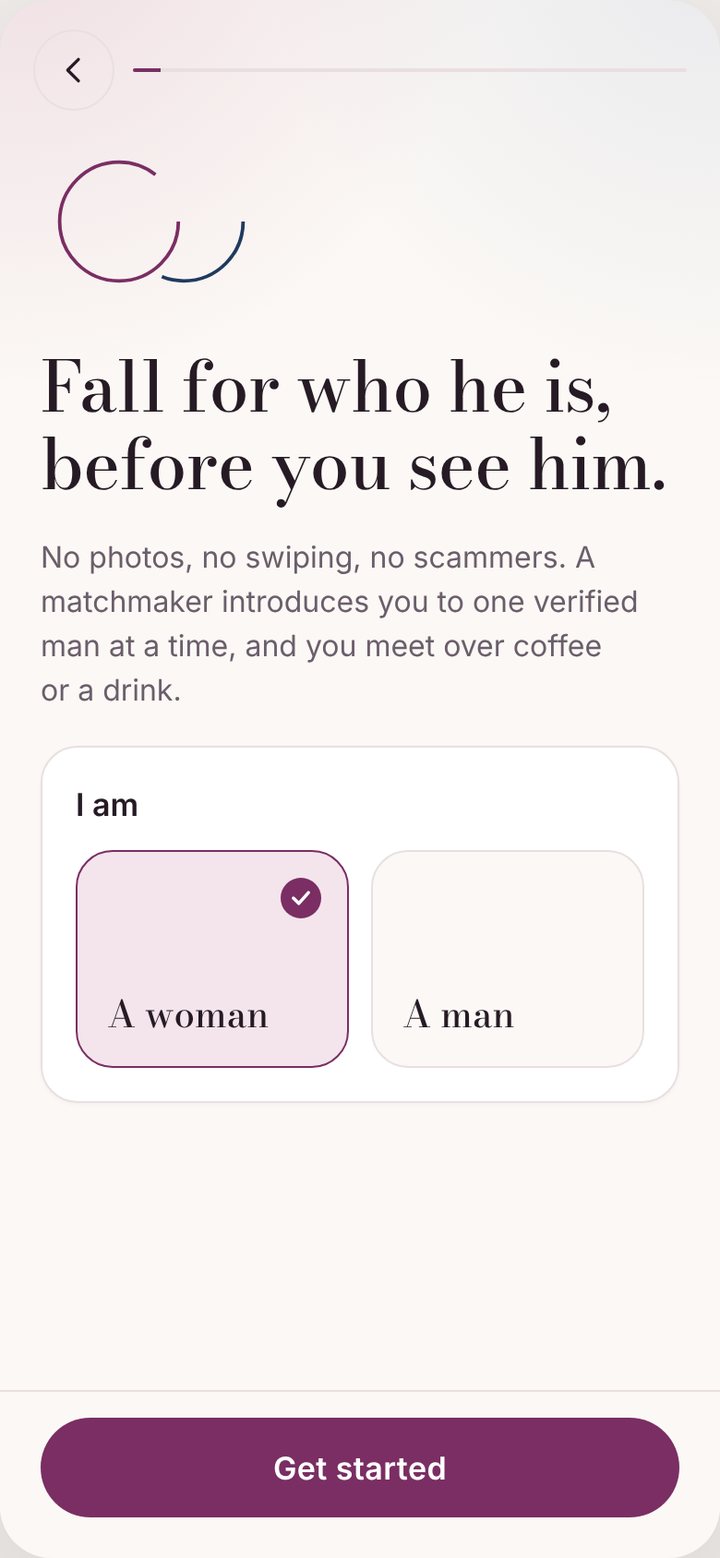
Her flowFall for who he is, before you see him
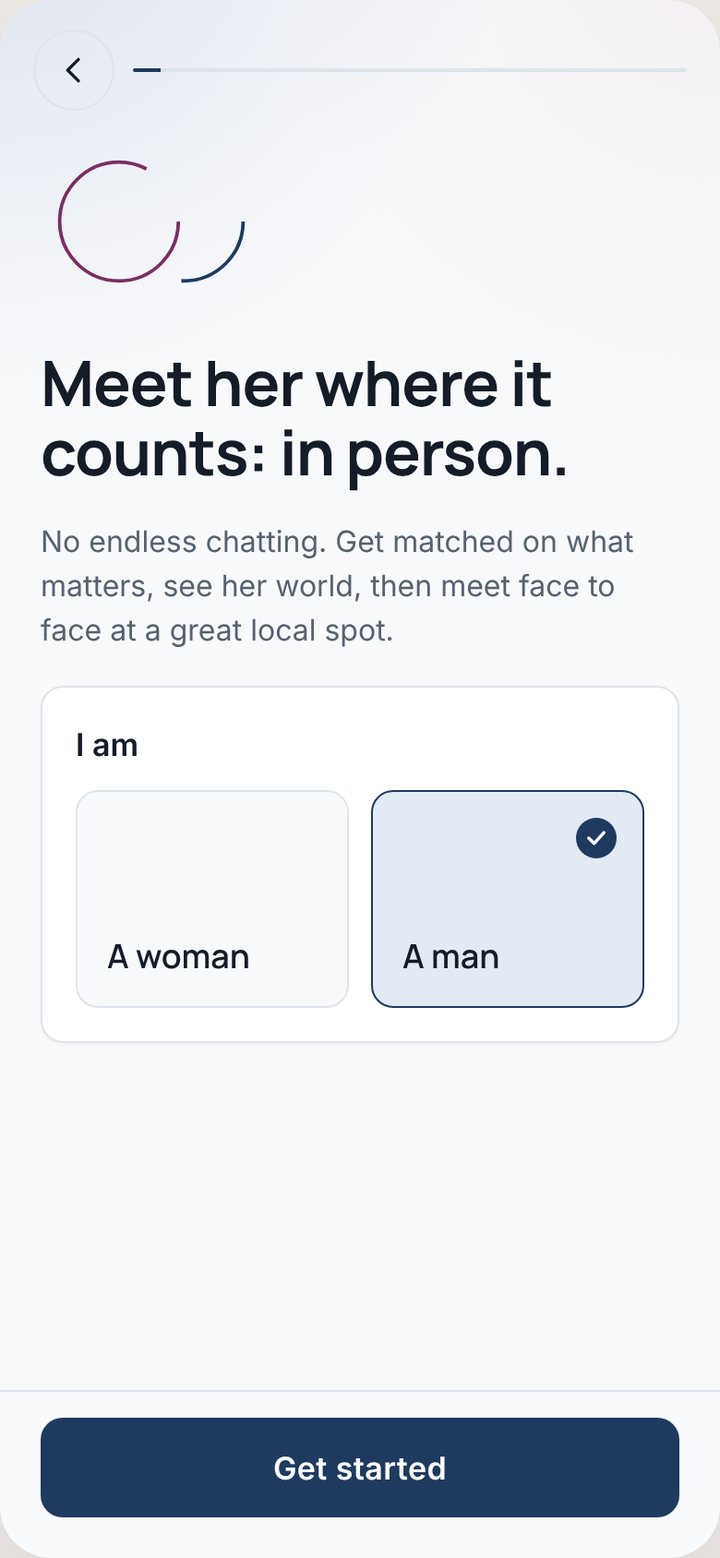
His flowMeet her where it counts: in person
Deal-breakers that are never broken
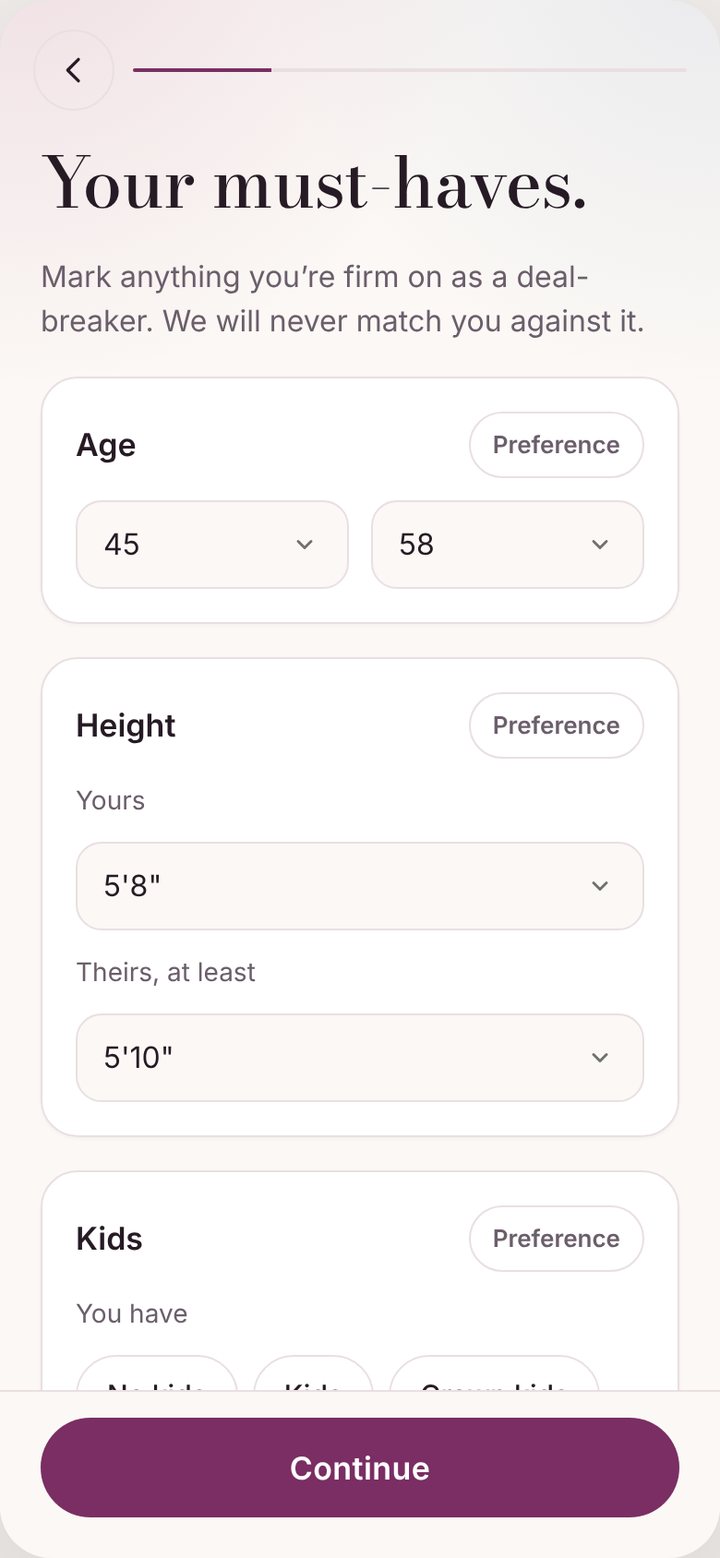
Most apps treat preferences as suggestions. On Tête, anything can be locked as a deal-breaker: age, height, kids, smoking. If it’s locked, the app will never match you with someone who doesn’t fit, on either side, so nobody gets rejected for something they could have known up front.
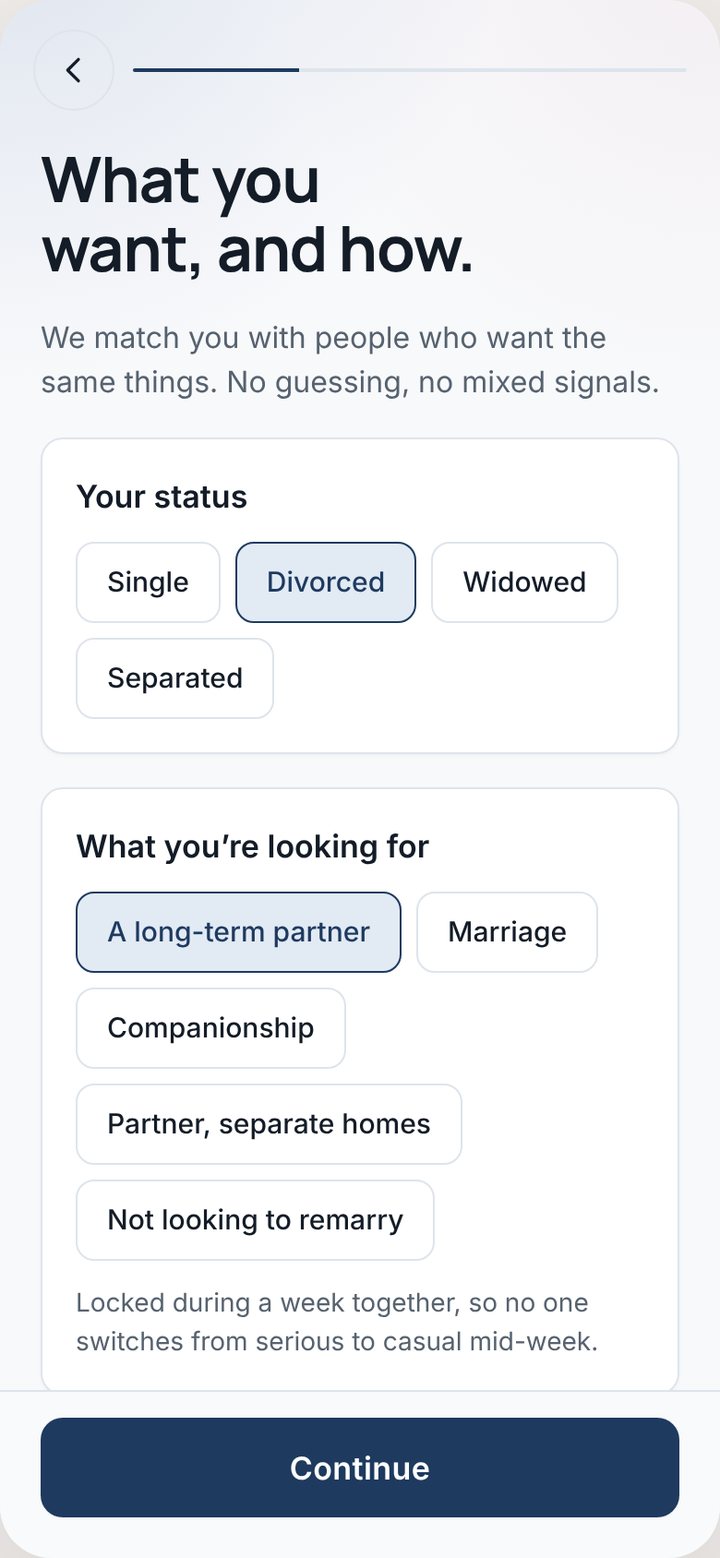
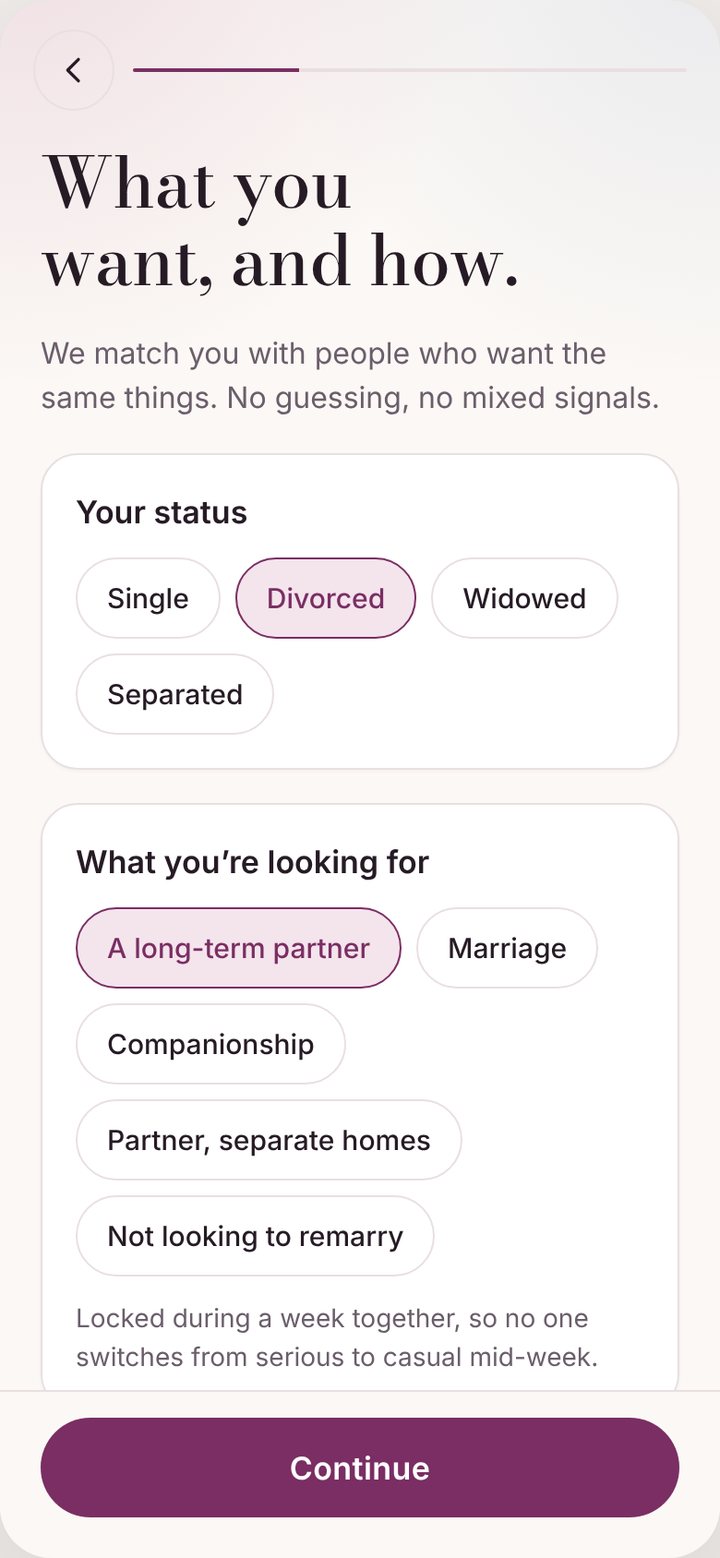
Status and intentions are set before matching. Separated people can’t join yet, and what you’re looking for is locked during a week together, so nobody switches from serious to casual halfway through.
Her flowAny preference can become a deal-breaker
Her flowStatus and intentions, up front
His flowHe answers the same questions
Real people, honest photos
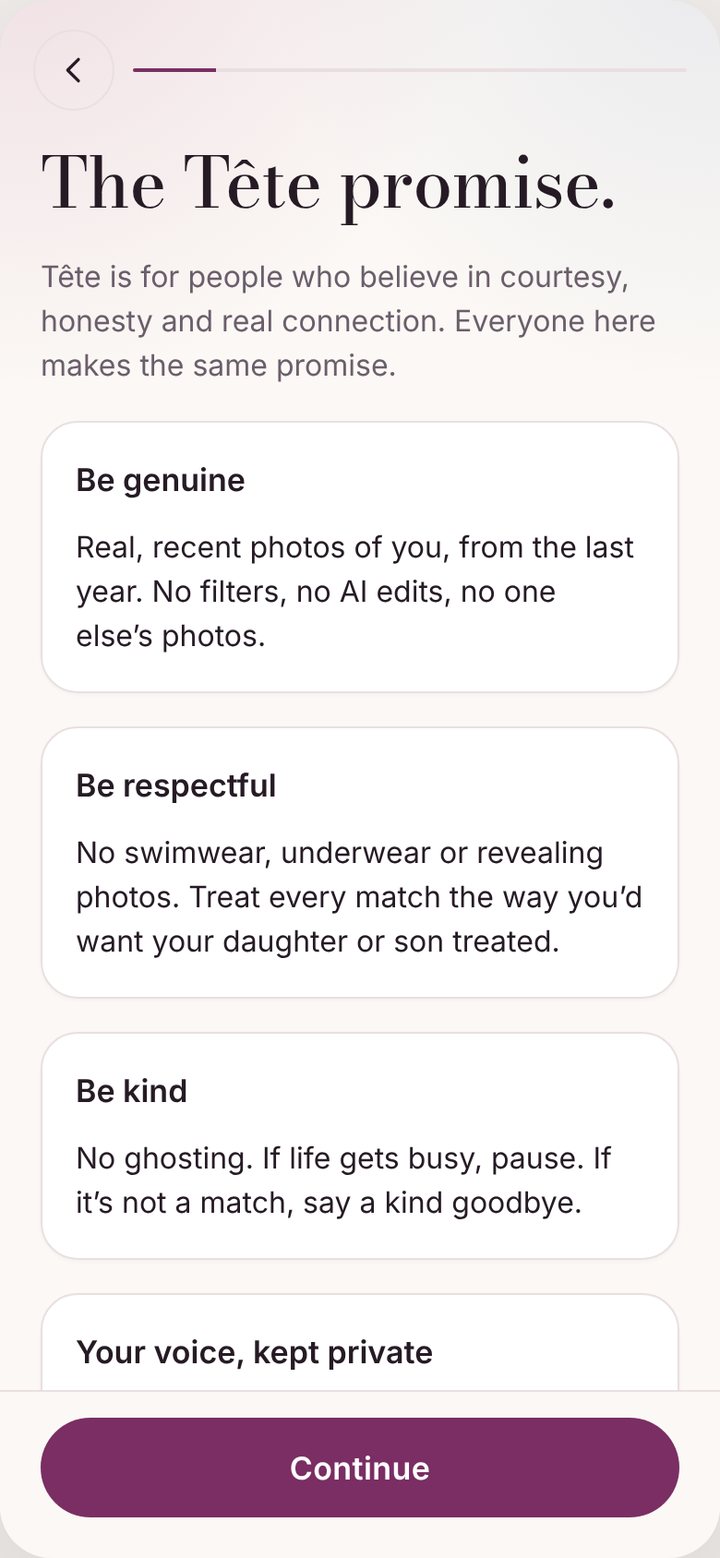
Everyone makes the Tête promise before joining: genuine, respectful, kind. Photos must be recent and unfiltered, with nothing revealing. Every account is checked with a government ID and a live selfie. The match never sees either; they only know the person is real.
Voice notes are turned into text and screened for the classic scam scripts: requests for money or crypto, gift cards, or moving the chat to another app. Only the words are checked, never the voice itself.
People go by a Tête name during the week. Real first names are shared only after both say yes to meeting, and last names never are.
Her flowThe promise everyone makes

His flowID and a live selfie, verified privately
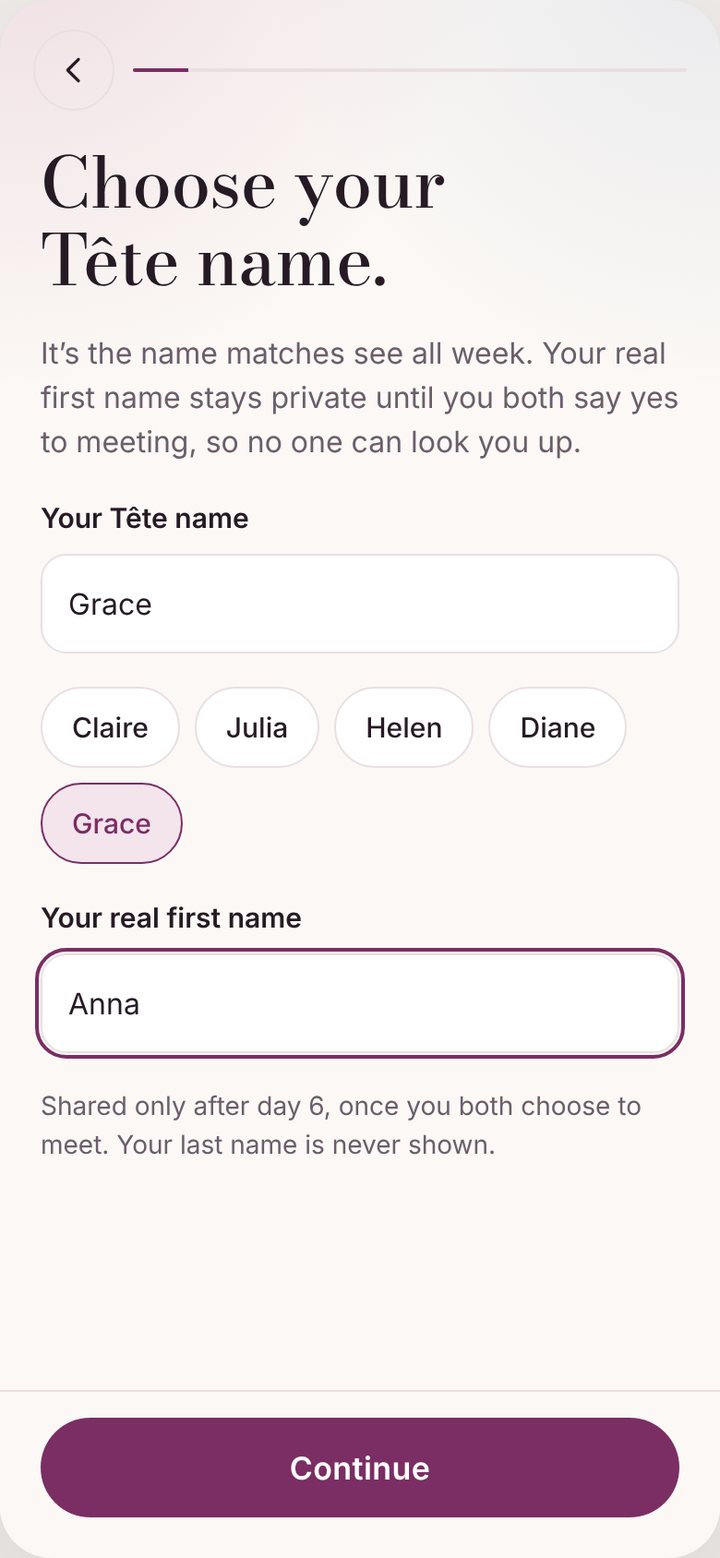
Her flowA Tête name, not a real one
A life board and a voice instead of a photo
Instead of photos of themselves, people share a life board: photos of the things they love, like a mountain summit or a camping trip. Faces, swimwear and filters are rejected automatically. Each person also gets an aura, a soft blend of color made from their answers, which is what matches see in place of a picture.
Women told me they fall for how a man talks, so his voice note answering “What does a perfect Sunday look like?” is required. Hers is optional.

His flowHis life board: what he loves, never him
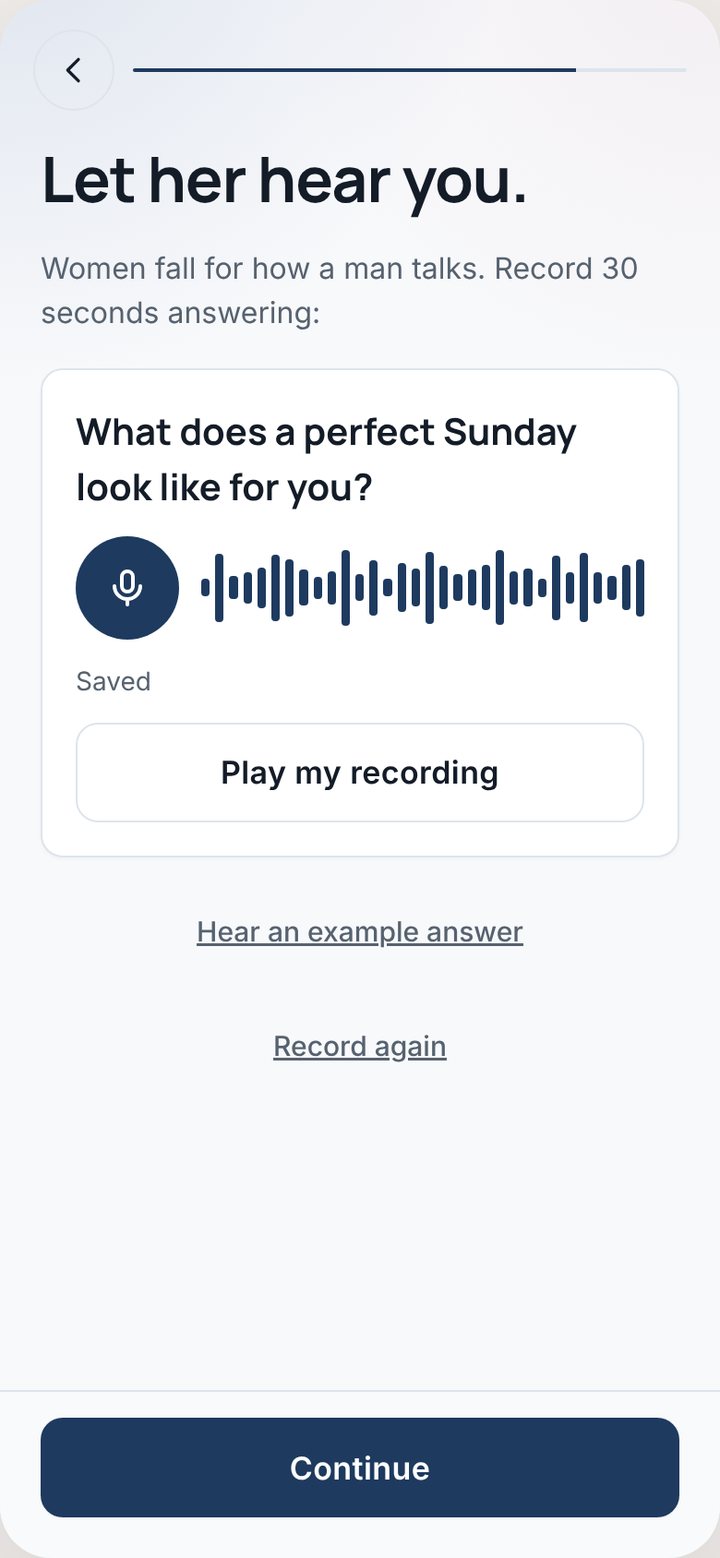
His flowHis voice note is required
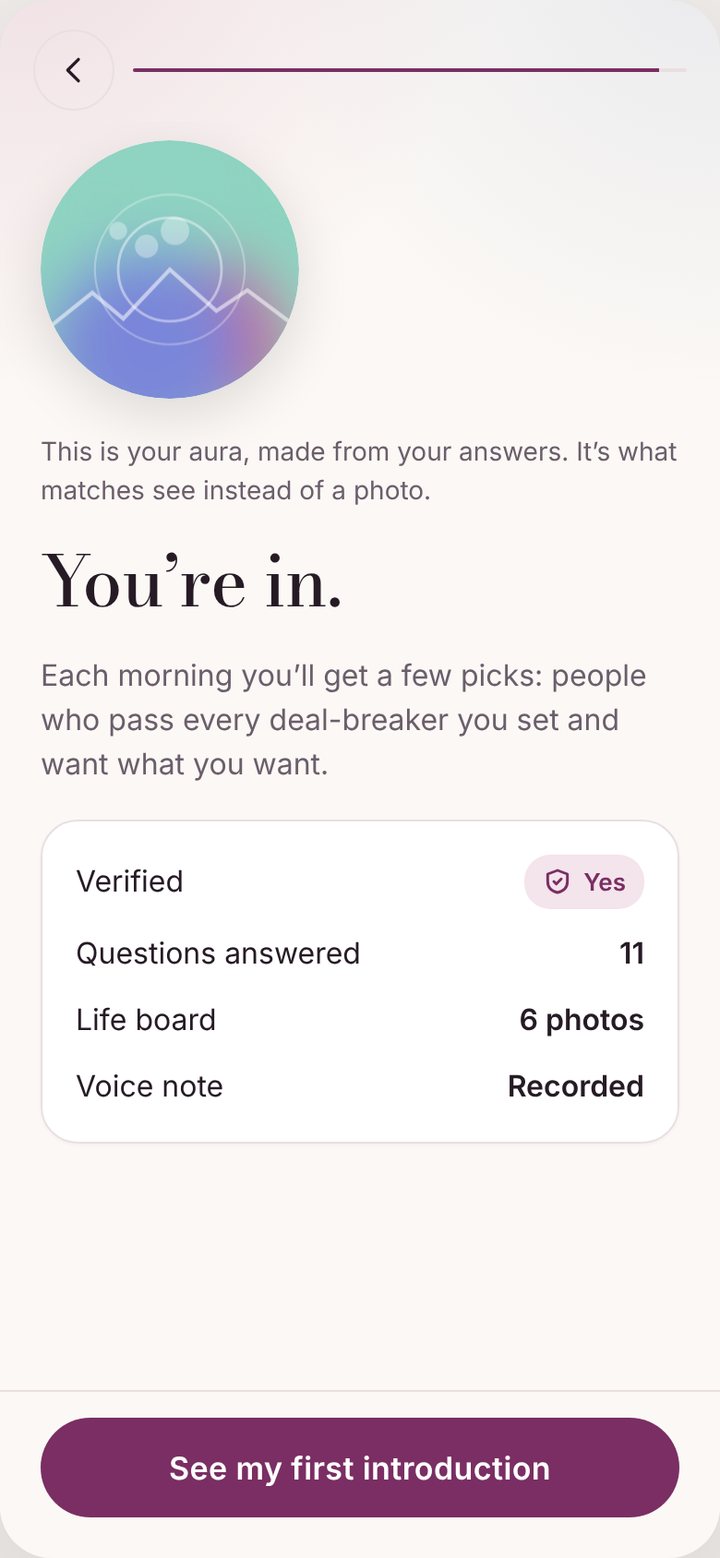
Her flowHer aura, made from her answers
No more “hey”
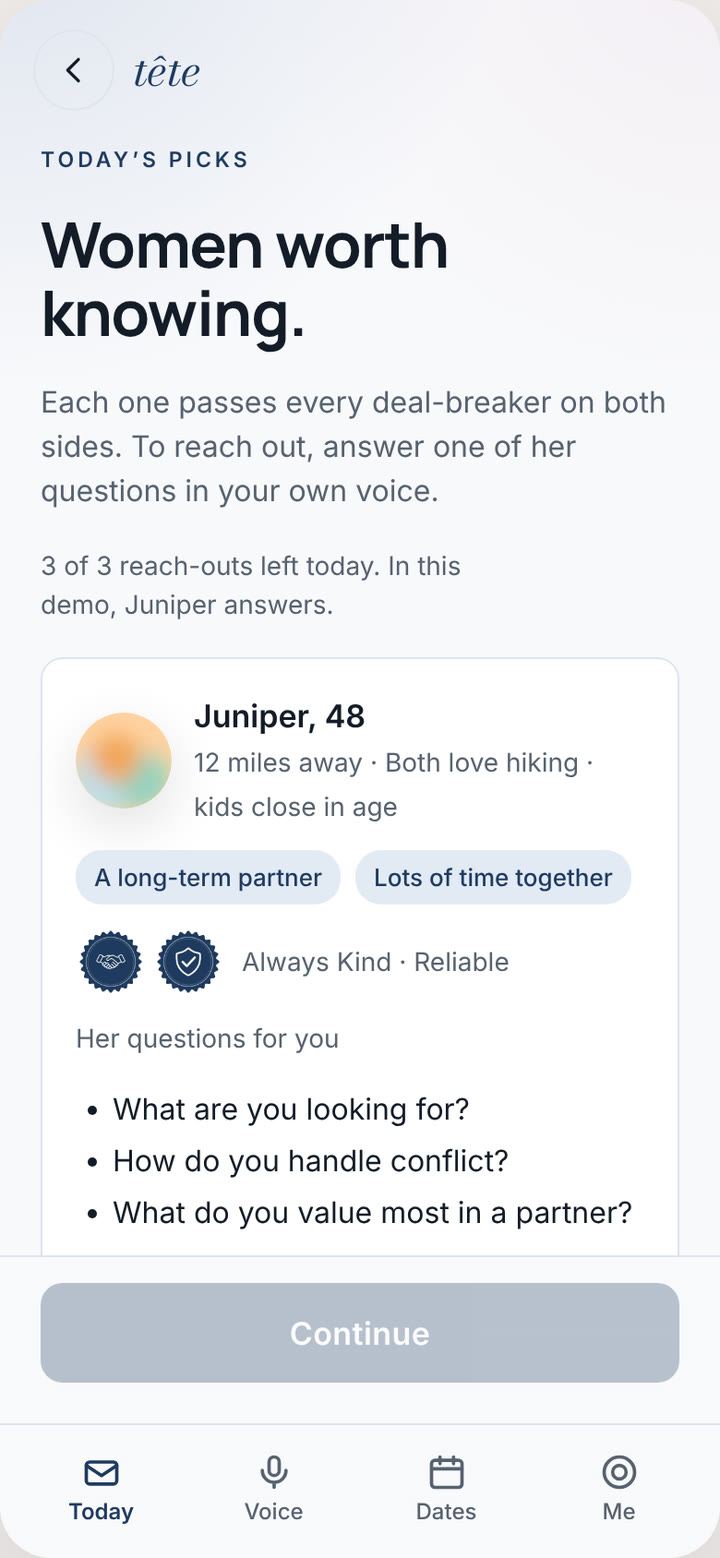
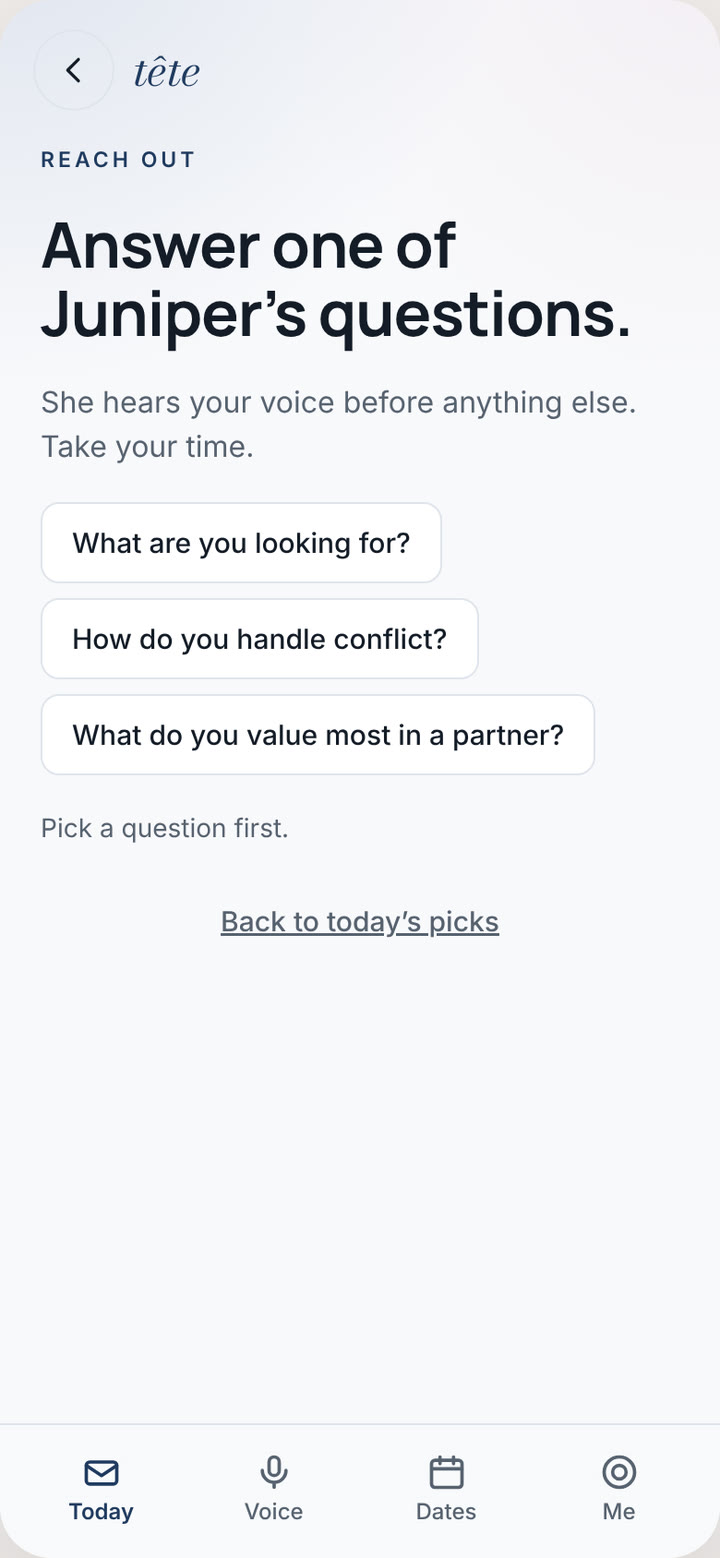
She chooses three questions for men to answer. To reach out, he records his answer to one of them, so the first thing she gets is his voice and a real answer. He has a few reach-outs a day, which keeps them thoughtful.
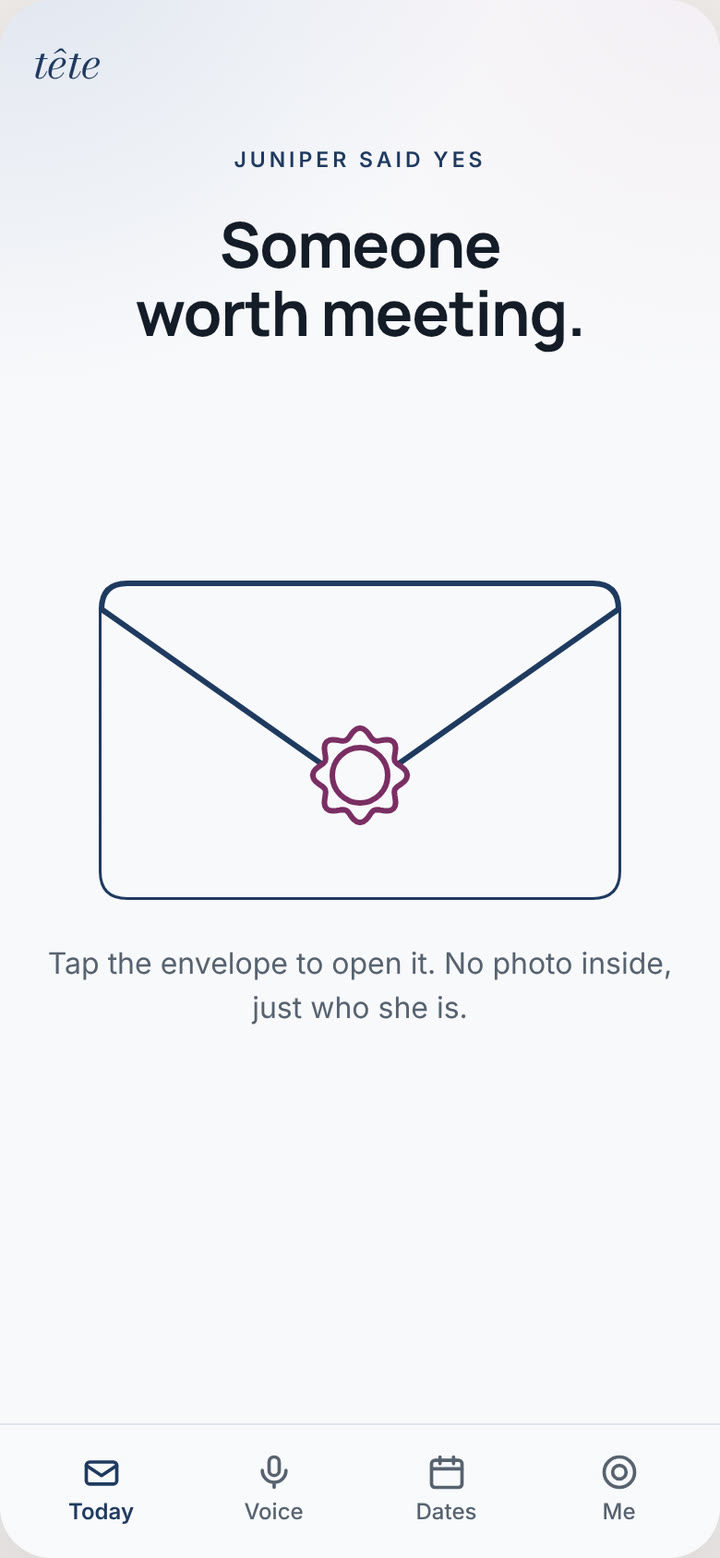
His note arrives as a sealed envelope. She opens it like a letter: no photo inside, just who he is, why they were matched and his voice.
His flowWomen suggested for him today
His flowAnswers one of Juniper's questions
His flowJuniper said yes
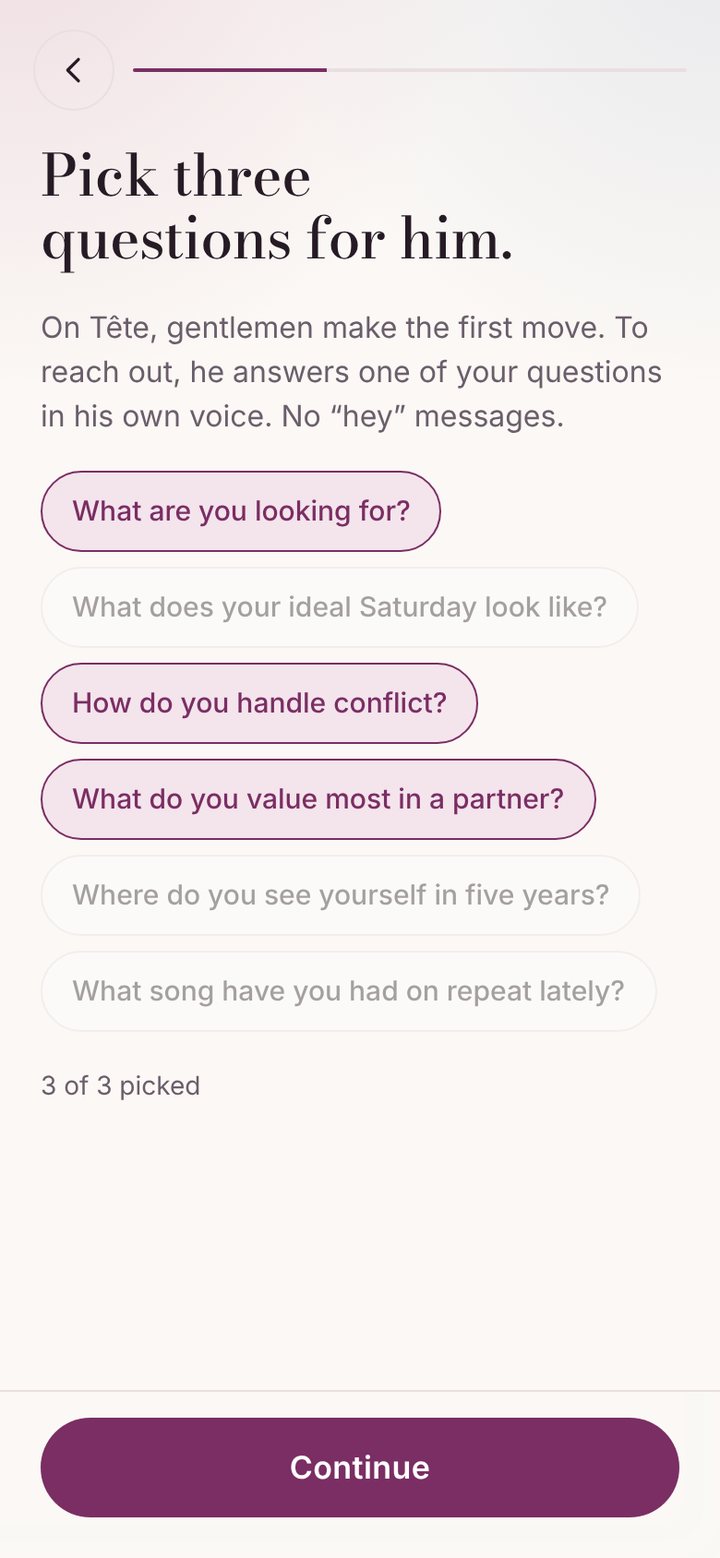
Her flowShe picks three questions for him
Her flowShe opens his introduction
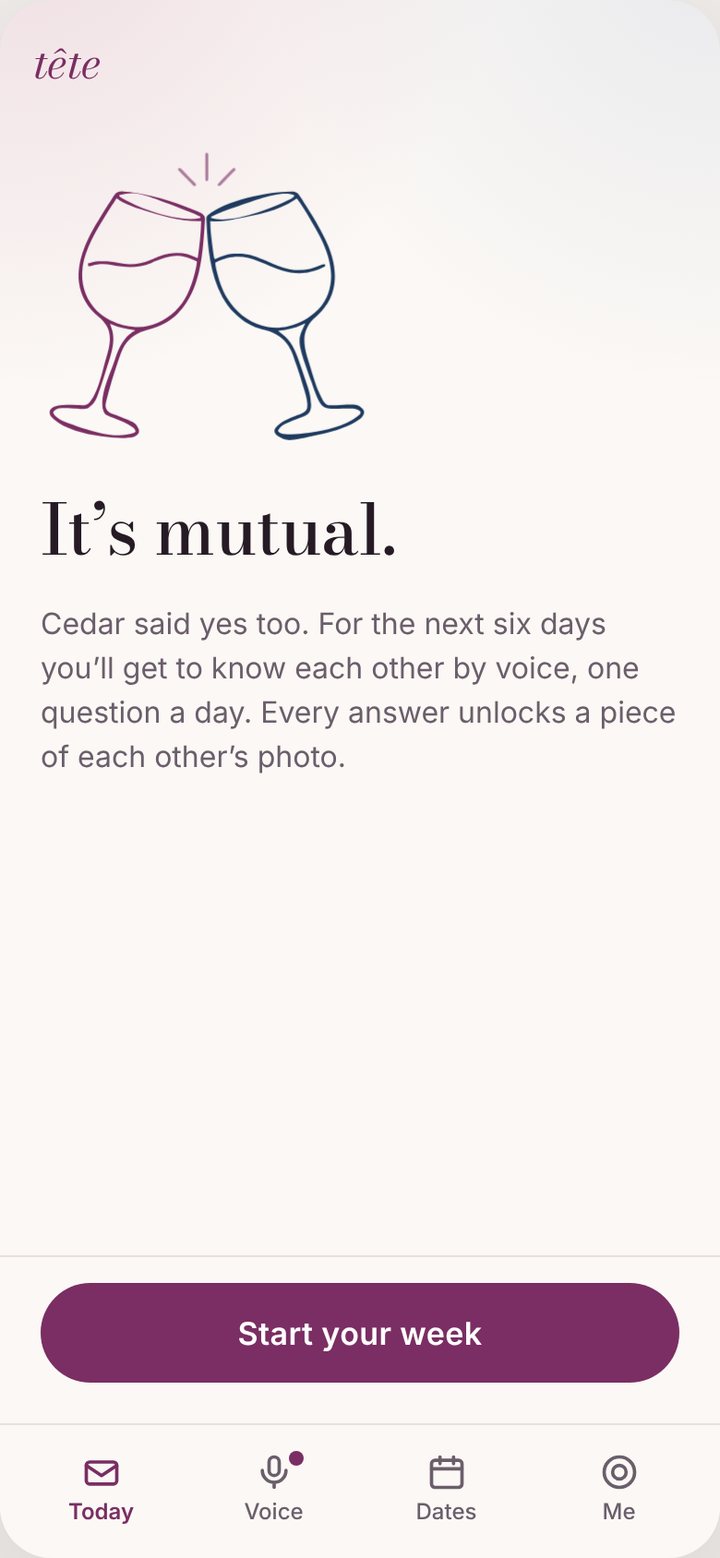
Her flowA yes from both starts their week
Six days, one photo piece at a time
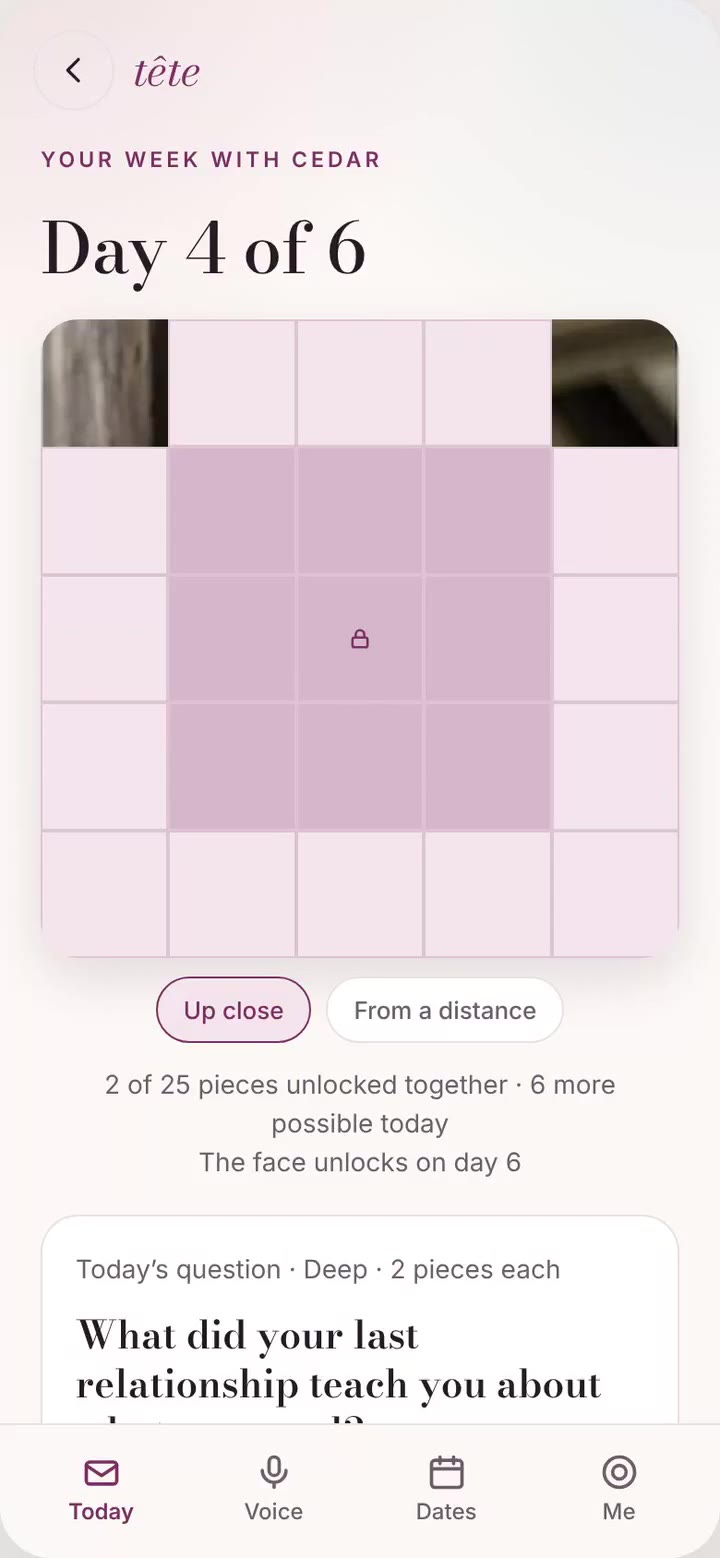
Once both say yes, they get a week together. Each day there’s one question, and they hear each other’s answers. Every answer unlocks pieces of each other’s photo: first a full-length photo from a distance, then a close-up. The face stays hidden until day 6.
On day 3 they share what would otherwise be a surprise at the table, like height, build, or a bad knee. On day 6 they see each other and decide together. Neither learns who said no. Real first names are shared only after both say yes, so nobody can be looked up online before meeting.
Everyone talks to up to four people at once, and life is allowed to happen: you can pause for a few days, but going silent ends the introduction kindly instead of leaving someone waiting.
Her flowPieces unlock as they answer
His flowReveal day
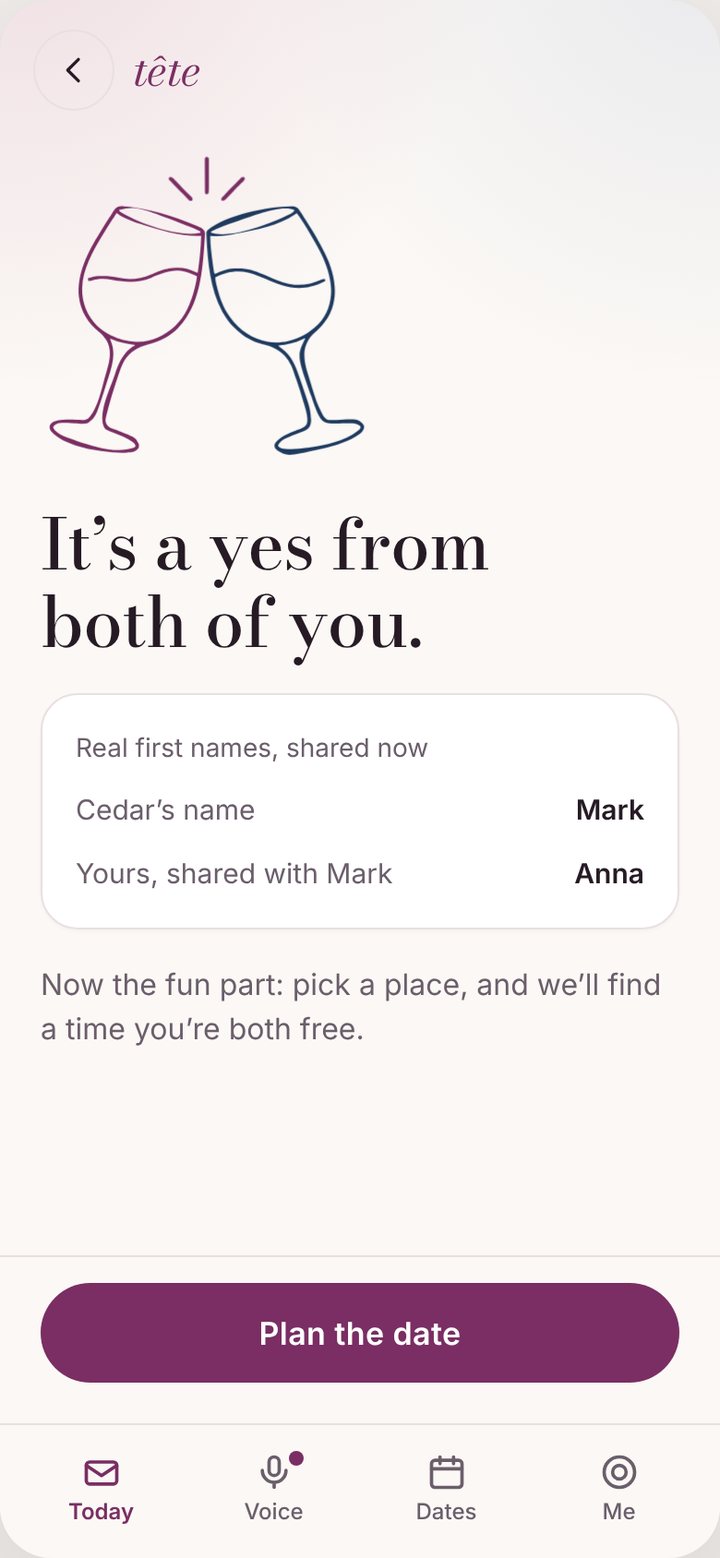
Her flowA yes from both, and real first names
Coffee first, and he takes care of it
First dates are short on purpose: coffee or dessert, with an end time everyone knows, so leaving is never awkward. Both rank their top three spots and pick the times that work, and Tête books the best overlap.
Safety is built in: she can share the plan with a friend and get a check-in 20 minutes into the date. The house rule is simple and stated up front: on Tête, the gentleman takes care of the date.
Her flowCoffee, then ranking the spots
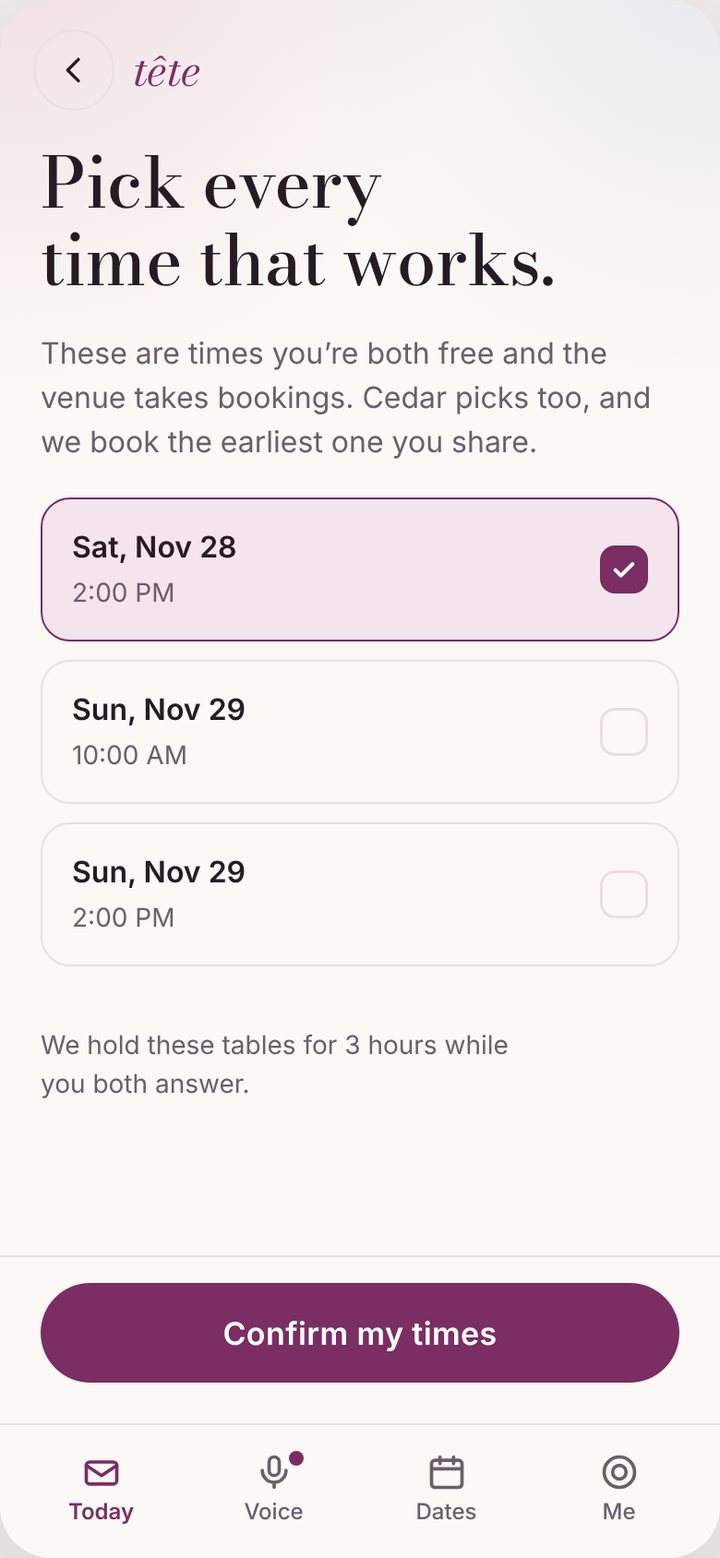
Her flowTimes they are both free
Her flowBooked, with a friend in the loop
Rewarding good behavior
When the time is up, each privately chooses whether to stay longer. After the date, she taps hearts for what he did well: on time, opened doors, took care of the bill, a good listener. There are only good badges, never bad ones, and he gets a notification when he earns one. Over time, the badges become something men want, and women can see them on his card.
Anything that felt off goes to Tête privately, and both answer whether they’d like to see each other again. The other person only finds out if both say yes.
Her flowHearts for what he did right
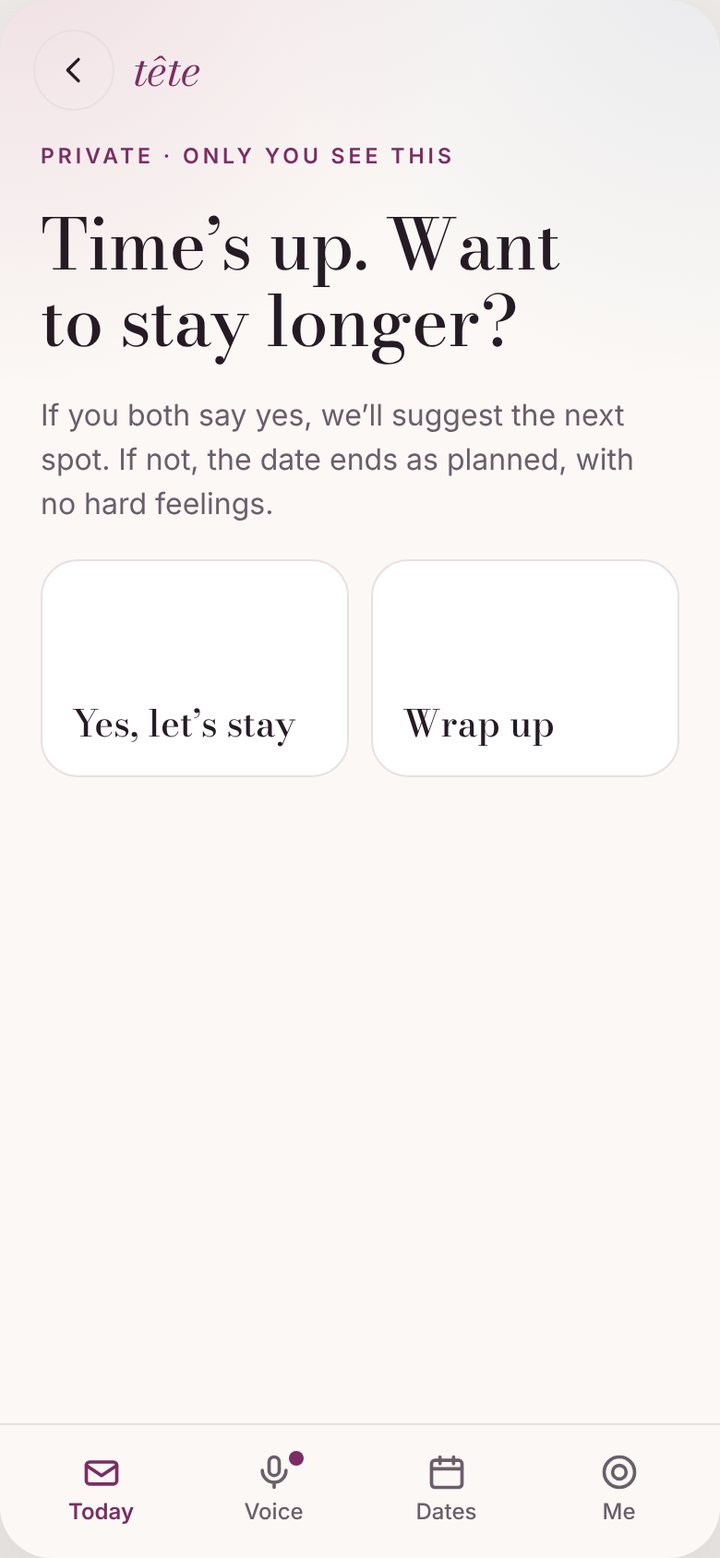
Her flowStay longer, only if both want to
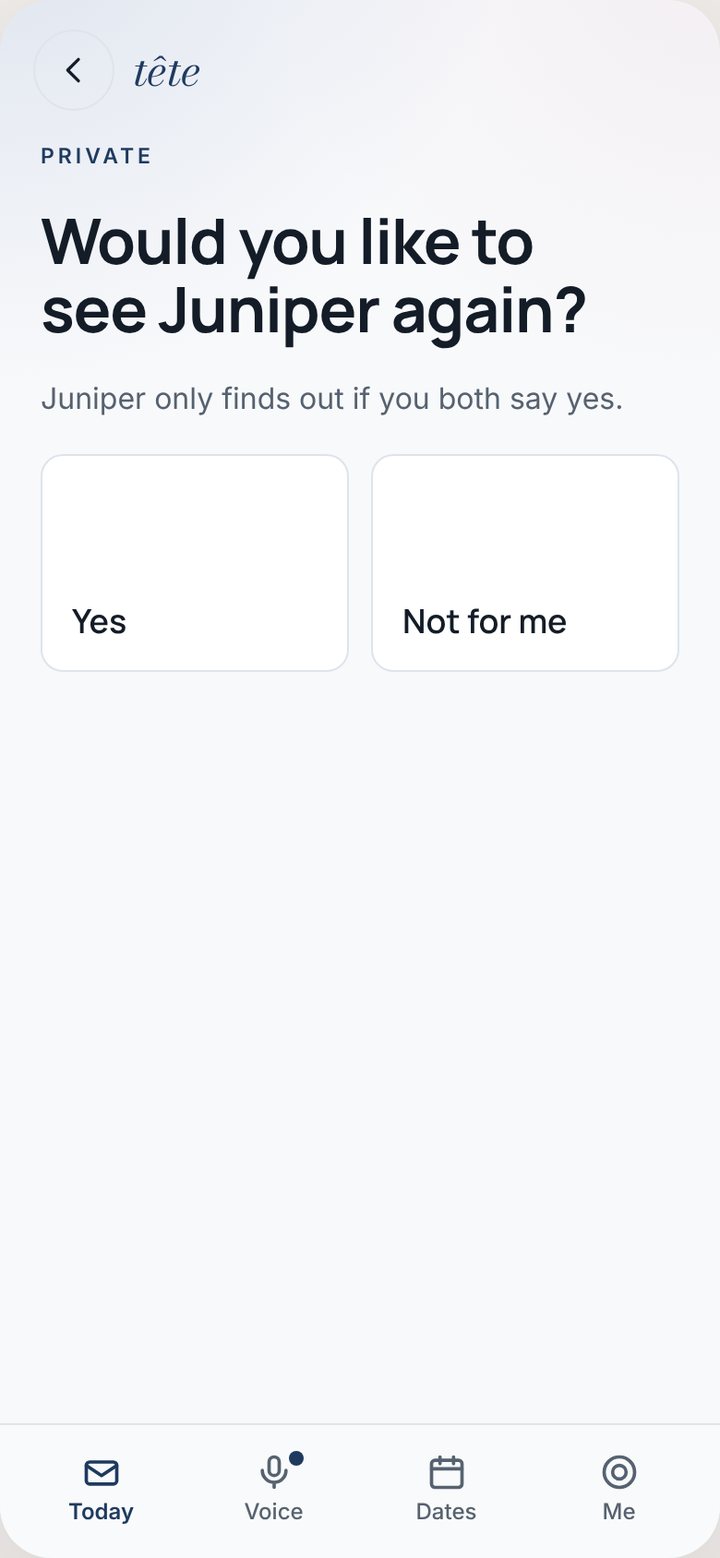
His flowA second date, only if both want it
AI as a research and build partner
I used AI to research the new wave of AI matchmaking apps and what people say about them, to pressure-test each rule against the complaints I collected, and to build the working demo of both flows, including the sample voices. Every product decision, from the rules to the tone of each screen, was mine.
From a demo to a first city
Next comes real ID and selfie verification, a transcription vendor that doesn’t keep or train on audio, partner cafés and restaurants for first dates, and a legal review of the house rules. Then a small launch in one area to see how the slow week holds up with real people.
Slow is the feature
Every other app is designed to keep people swiping. Tête is designed to end with two people at a table. Taking away photos, speed and endless choice turned out to be the product.