CrashSight
The witness was a dashcam.
CrashSight is a concept for a marketplace that connects drivers whose dashcams caught a crash with the insurers and law firms who need that footage for a claim. Drivers get an alert, share the clip in a tap and get paid. Buyers get verified evidence, matched to the crash by time and place.
The best witness is often a dashcam nobody asks
After a crash, the people involved often tell different stories, and the police report can't always settle it. Insurers and attorneys spend weeks trying to find witnesses, and most never turn up.
Meanwhile, cars that drove past may have recorded the whole thing. Most dashcams record over themselves on a loop, though, and their owners have no idea their footage mattered. By the time anyone thinks to ask, the clip is gone.
Following a claim from the crash to the settlement
I mapped how evidence moves through a claim: what an adjuster needs to accept a video, what a no-fault or personal injury attorney needs to use it, and what would make a driver bother to share. Every answer pointed to the same thing: the footage only has value if it's found fast and can be trusted.
I also looked at free public crash data, like state crash data repositories, NYC Open Data and the CTroads and 511NY traffic feeds, which can match clips to reported crashes without paying for expensive data on day one.
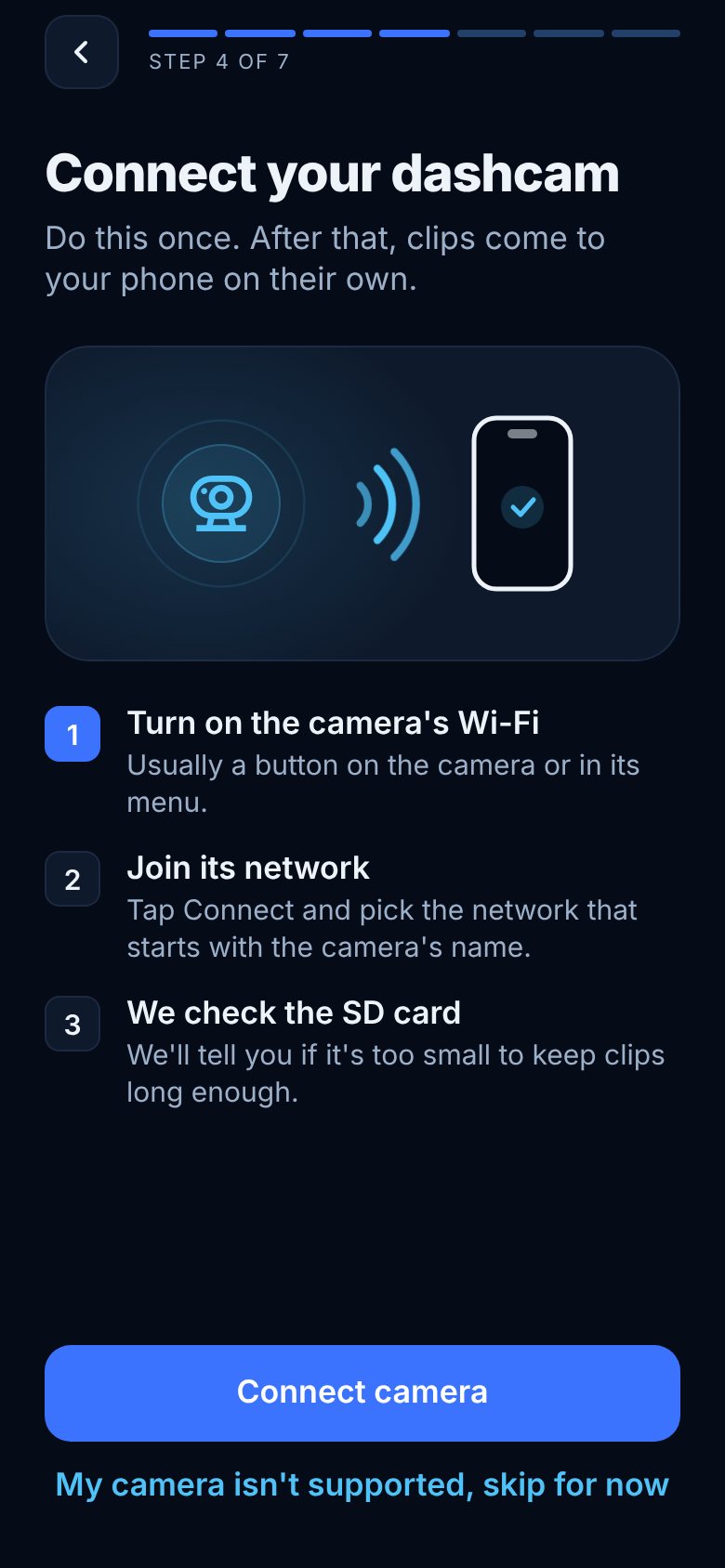
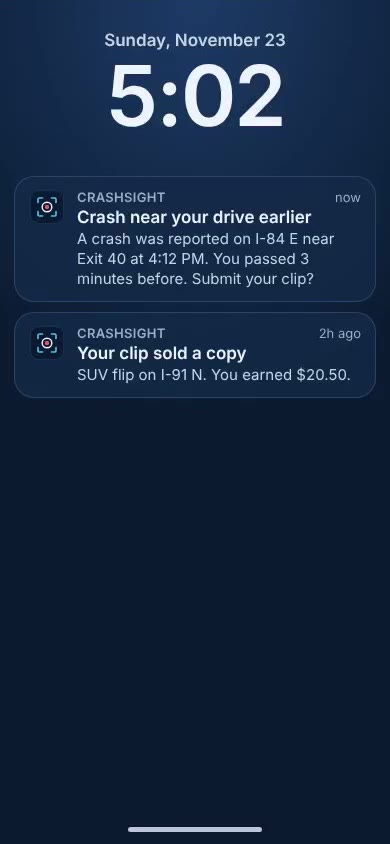
One alert, one tap, no editing
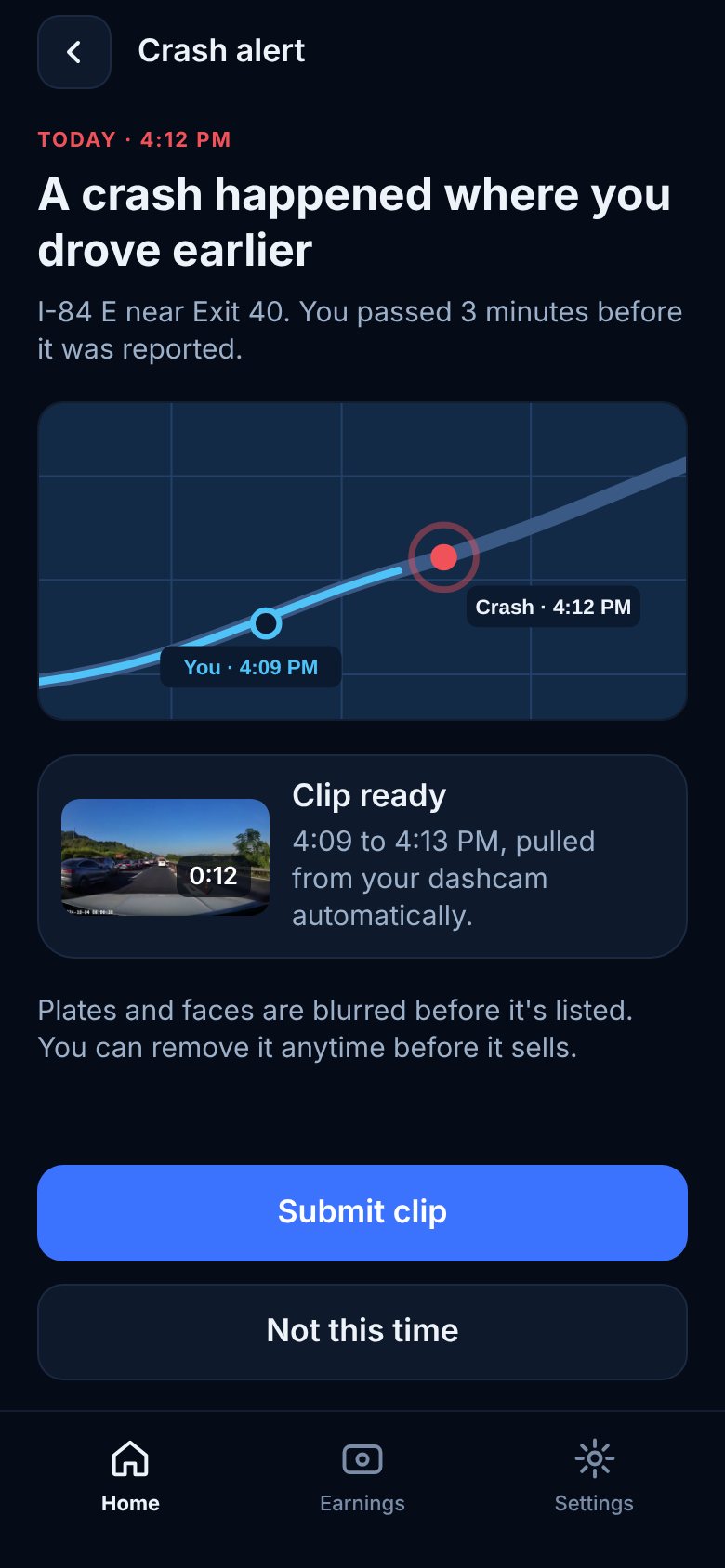
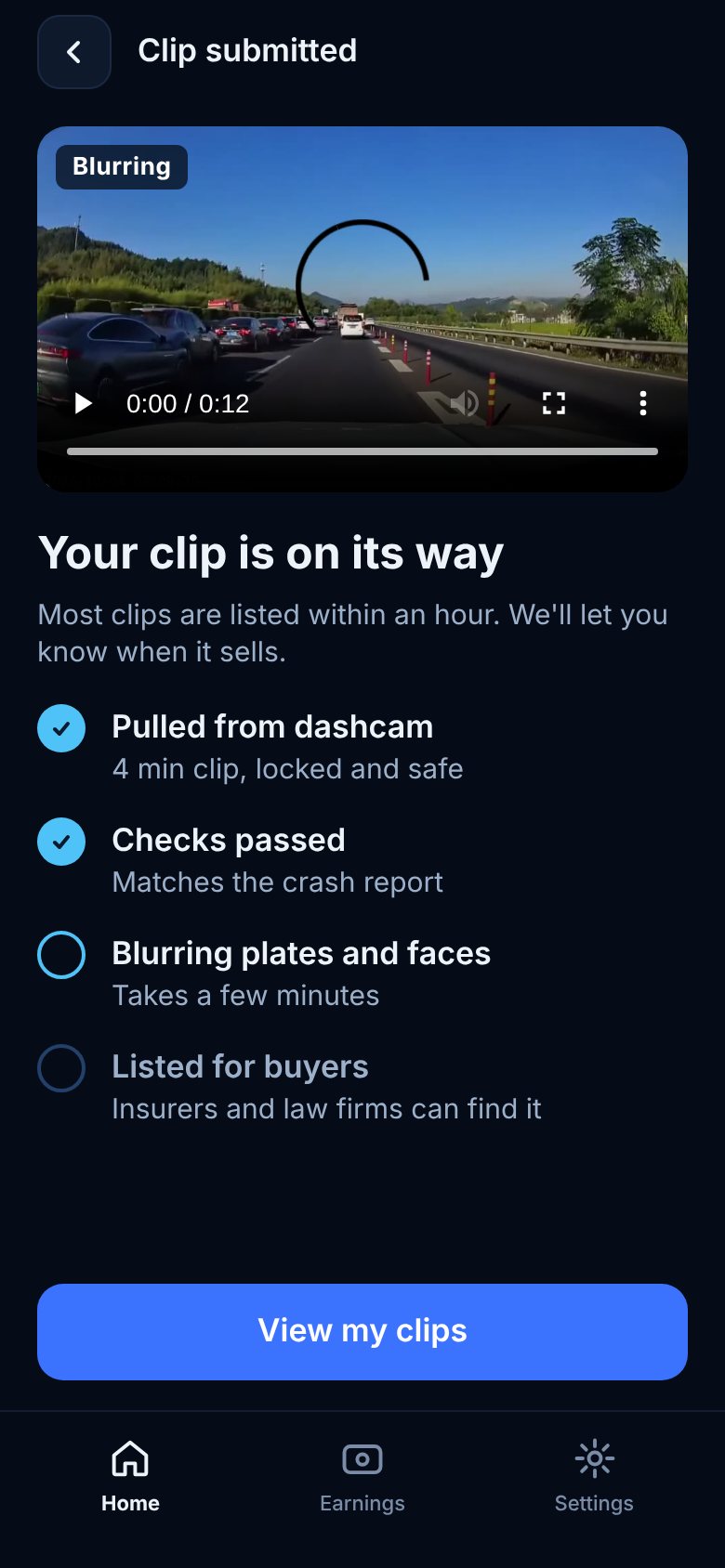
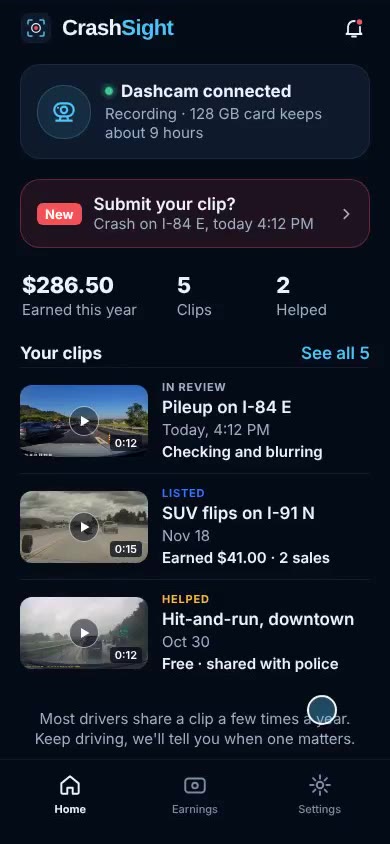
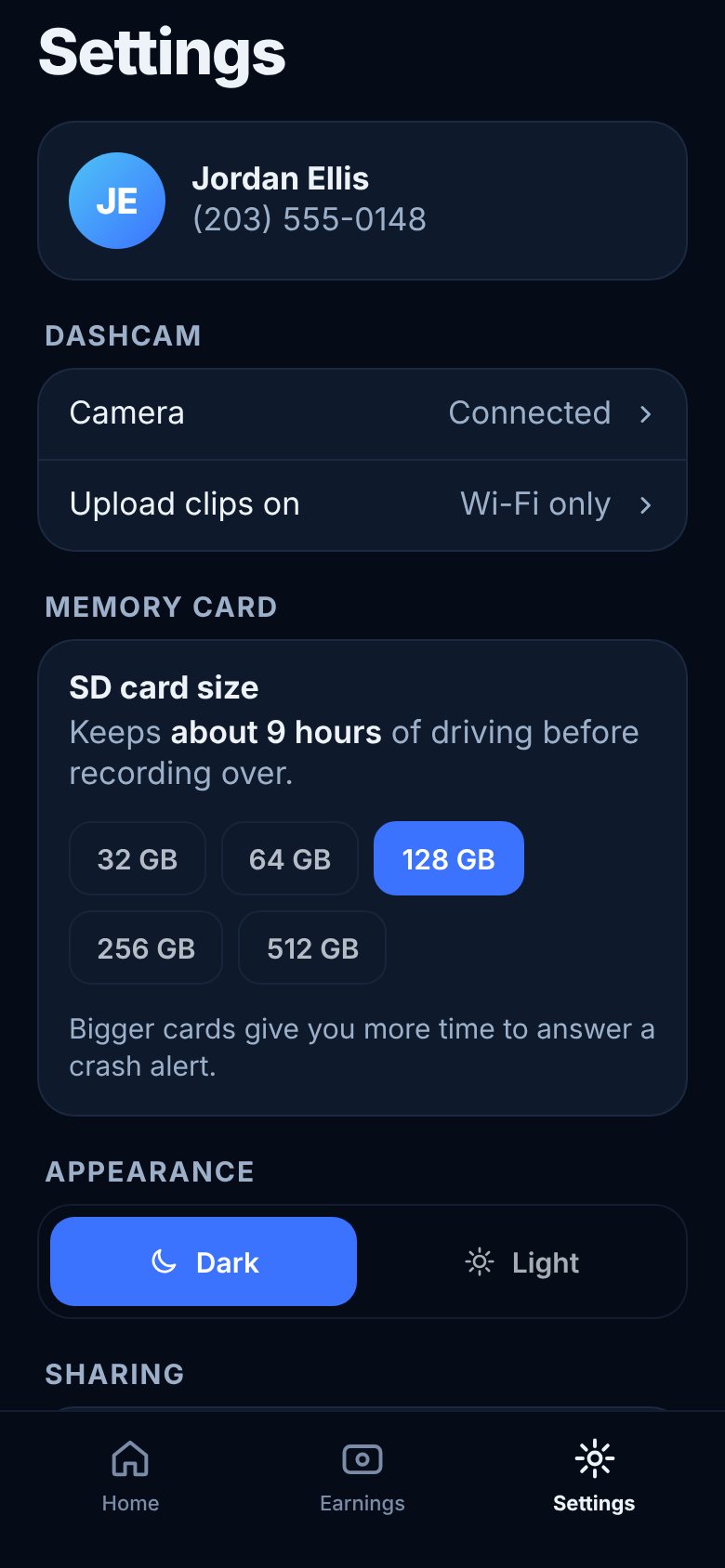
When a crash is reported on a road a driver used, CrashSight sends an alert. The clip is already pulled from their paired dashcam, trimmed to the right minutes and blurred, so sharing it takes one tap.
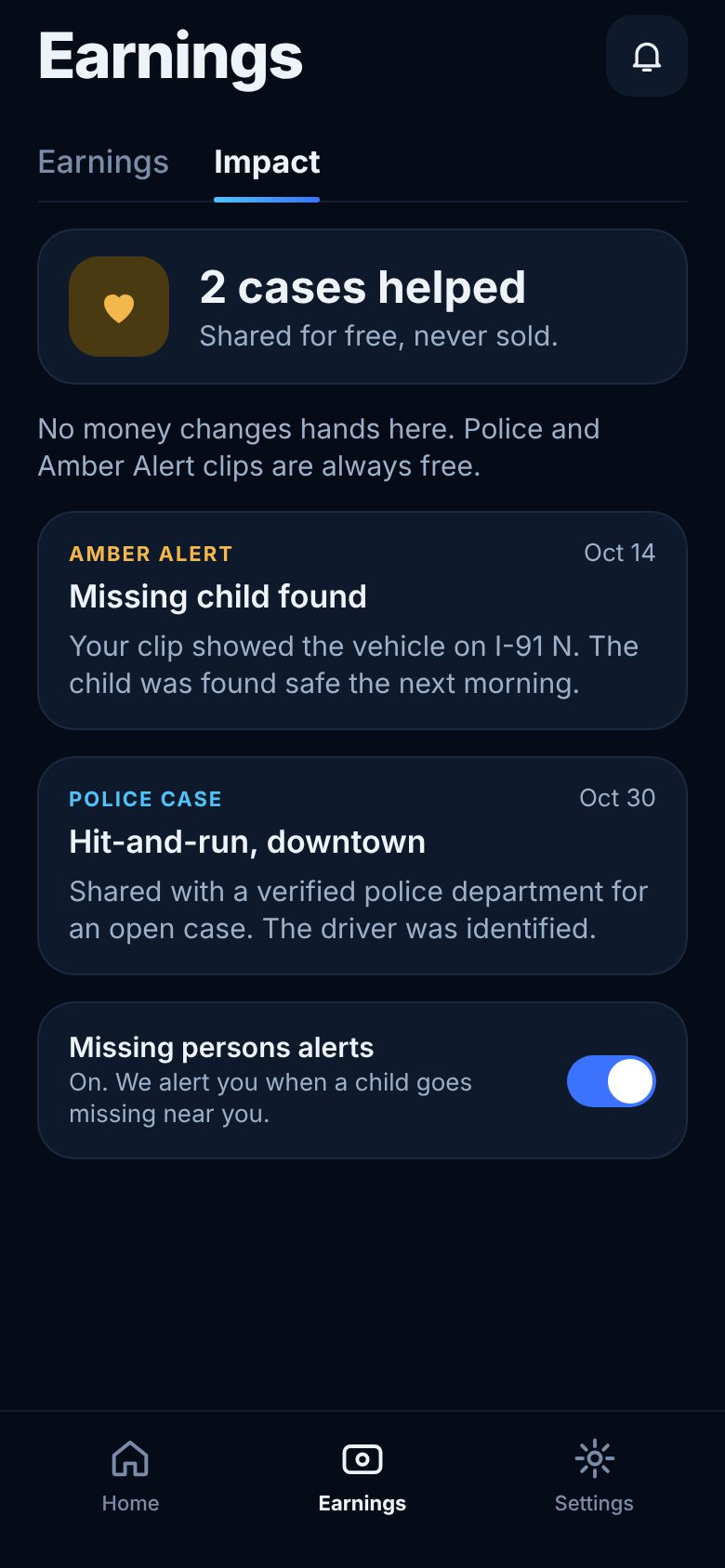
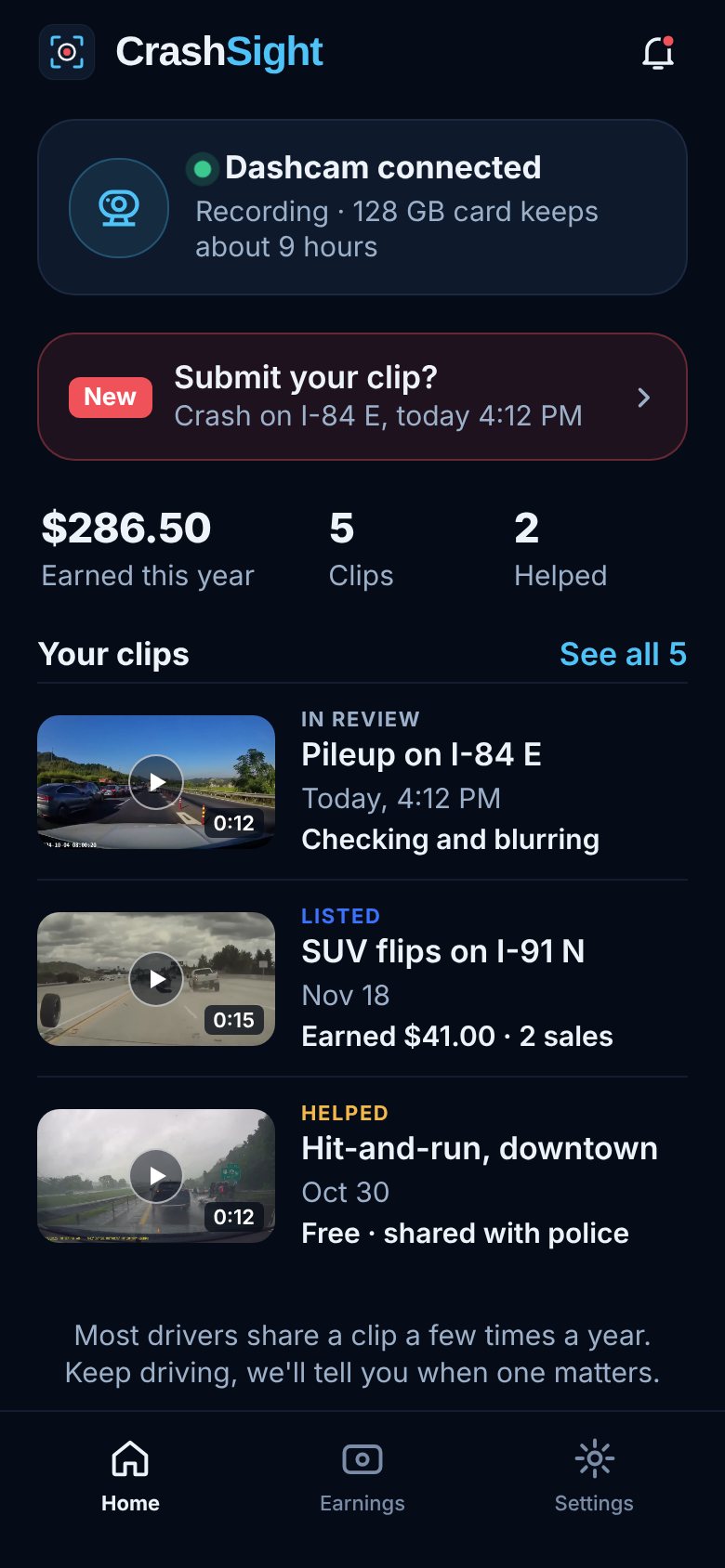
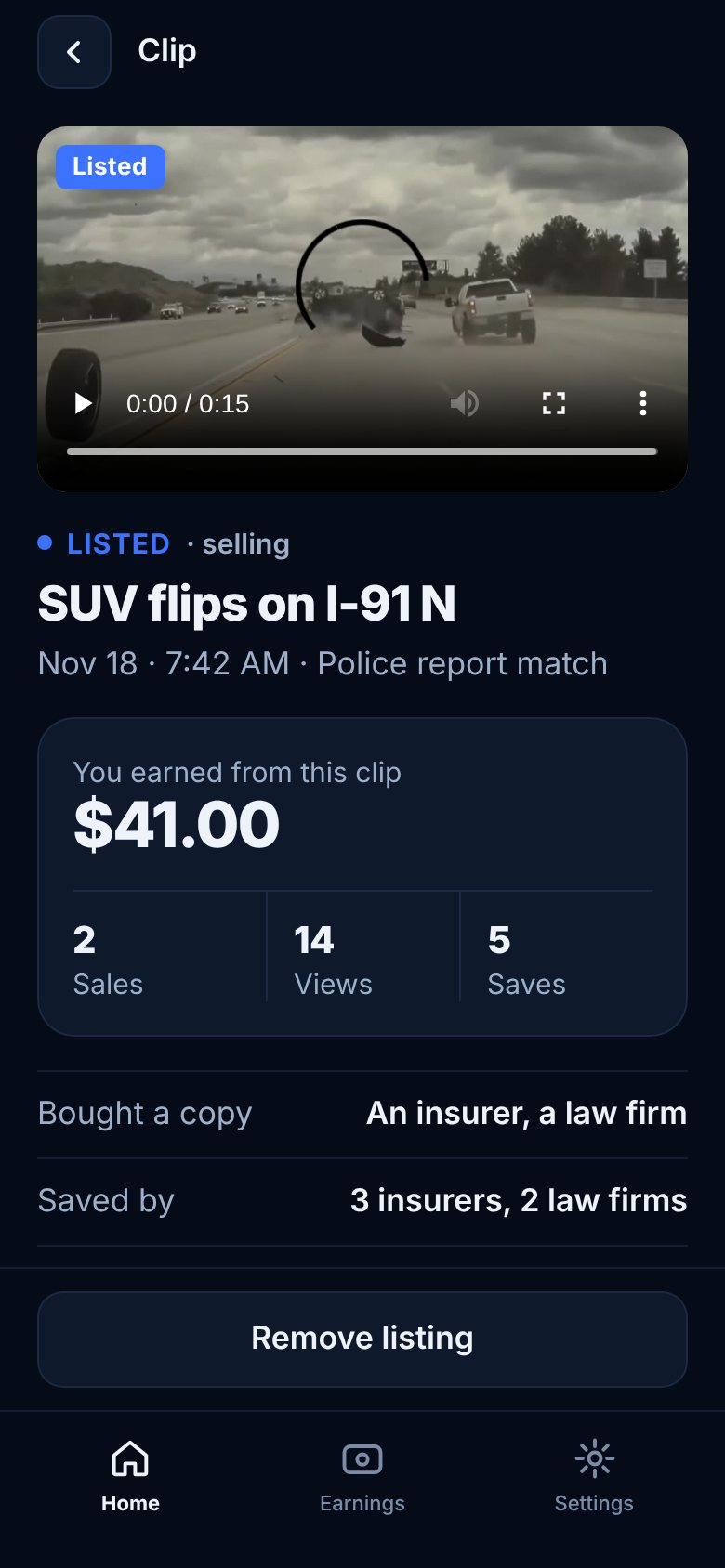
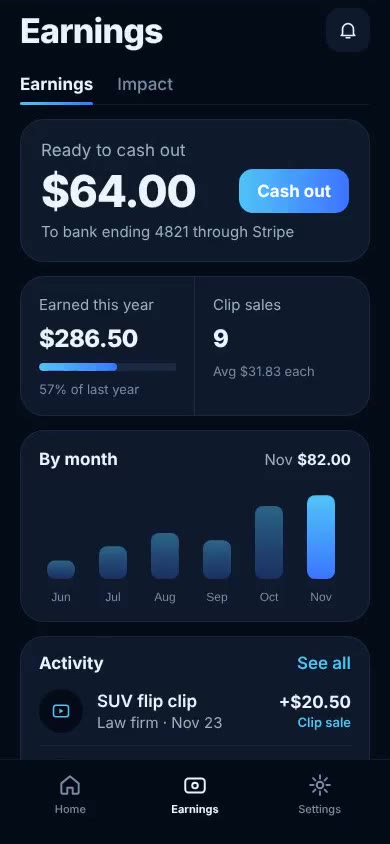
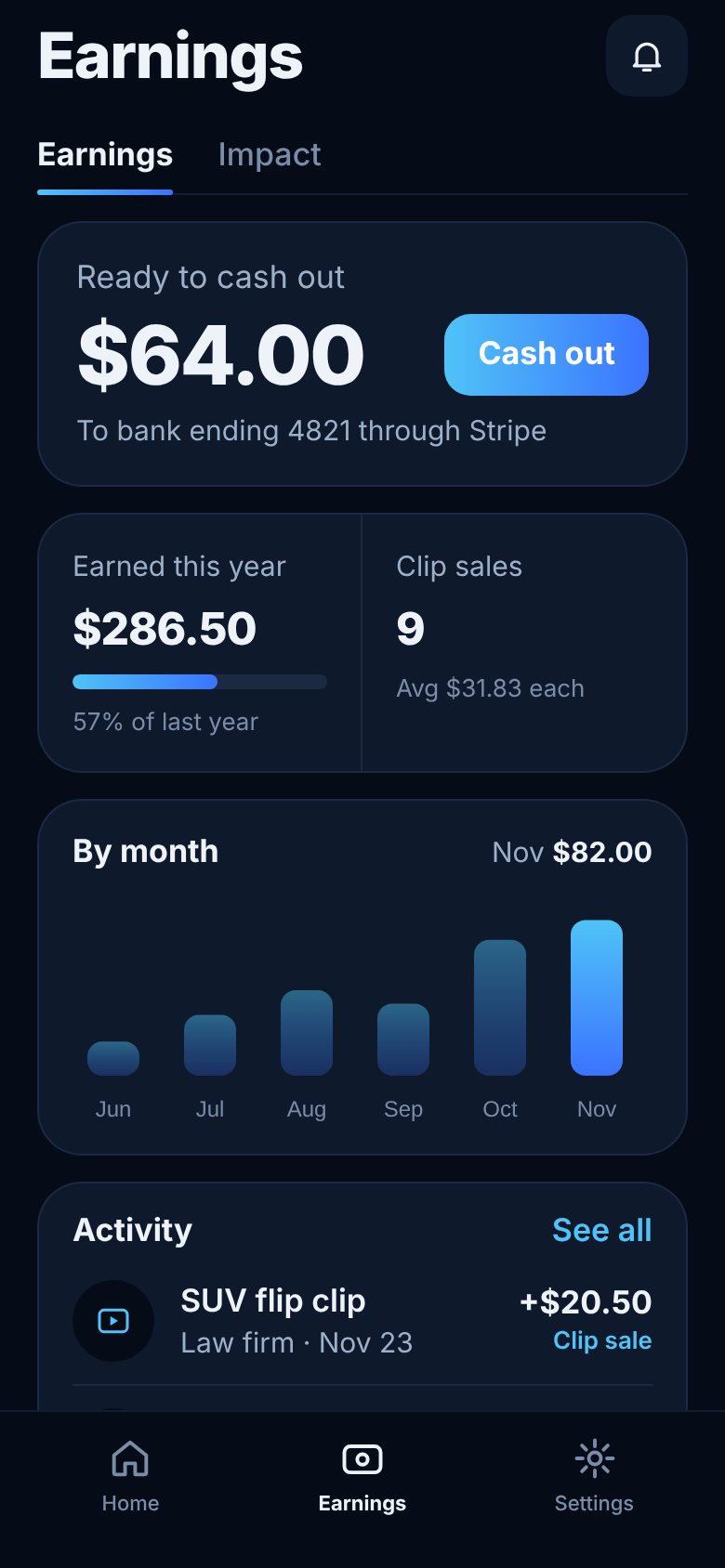
Drivers can say no, and they can remove a listing anytime before it sells. Their earnings and the cases their clips helped are always one tab away.
DriverAlert, one tap, clip submitted
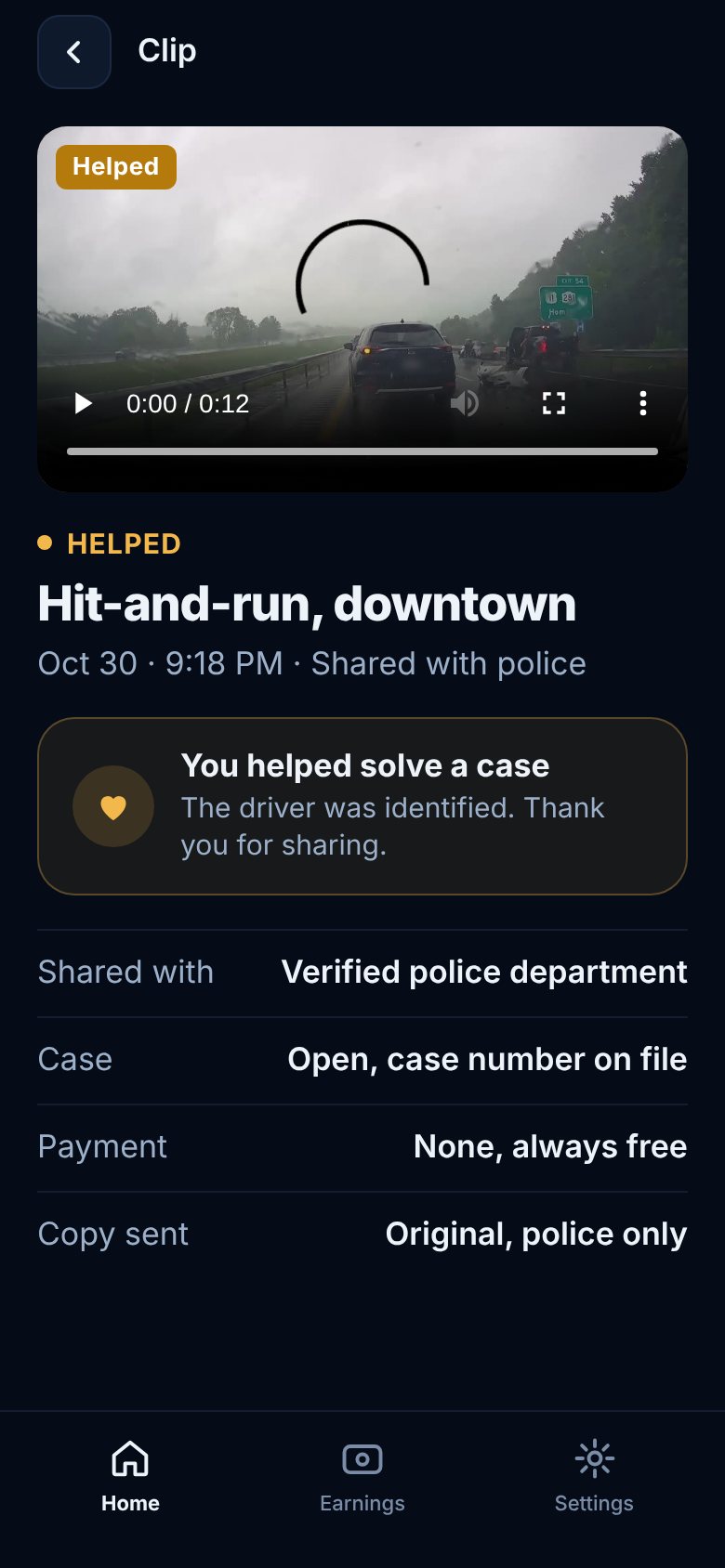
DriverClips and a live listing
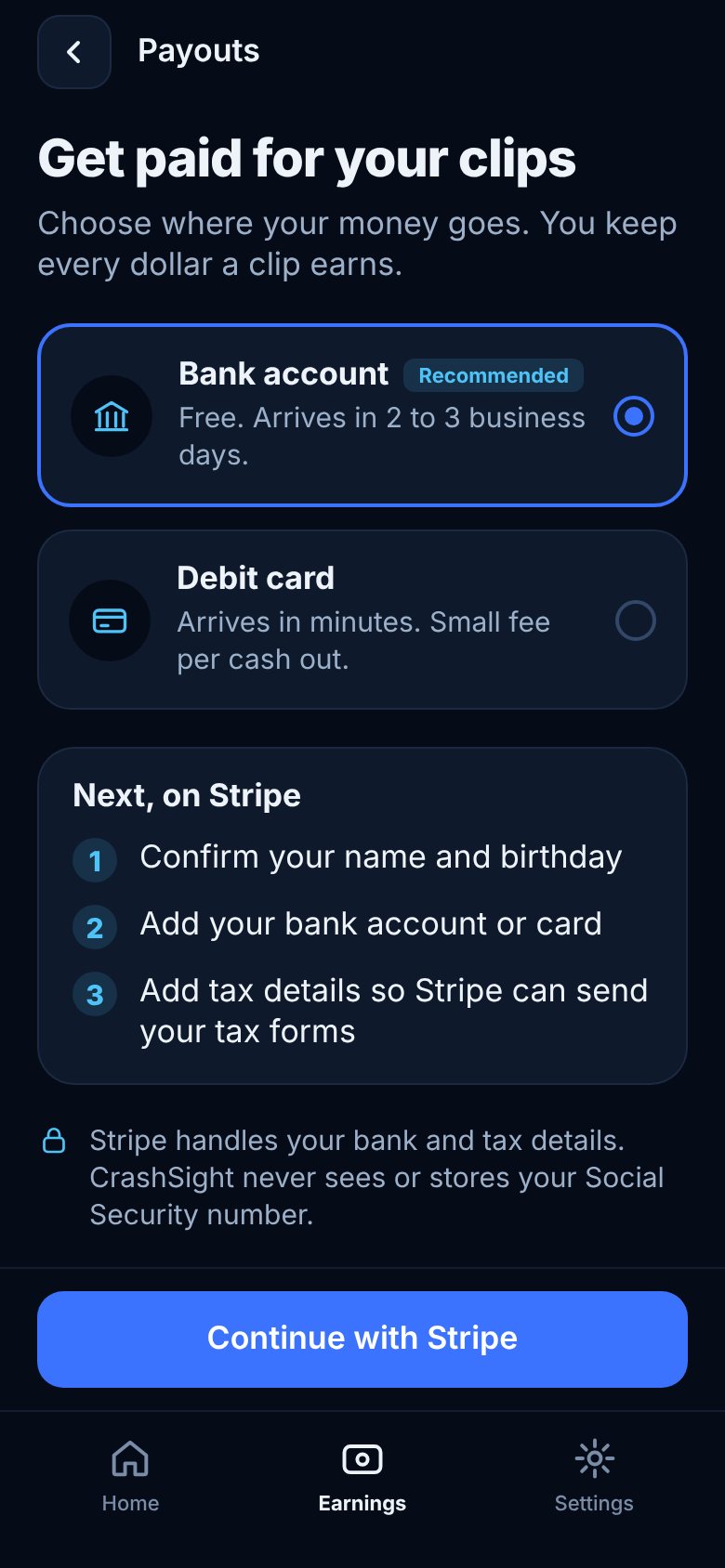
DriverEarnings and impact
A clip is only useful if you can trust where it came from
Anyone can upload a video, so the clip page shows buyers why this one is believable. Clips come straight from the driver's paired dashcam, not from a camera roll. Integrity checks confirm the original file matches the upload, the GPS track and clock agree with the crash report, and there are no cuts or edits.
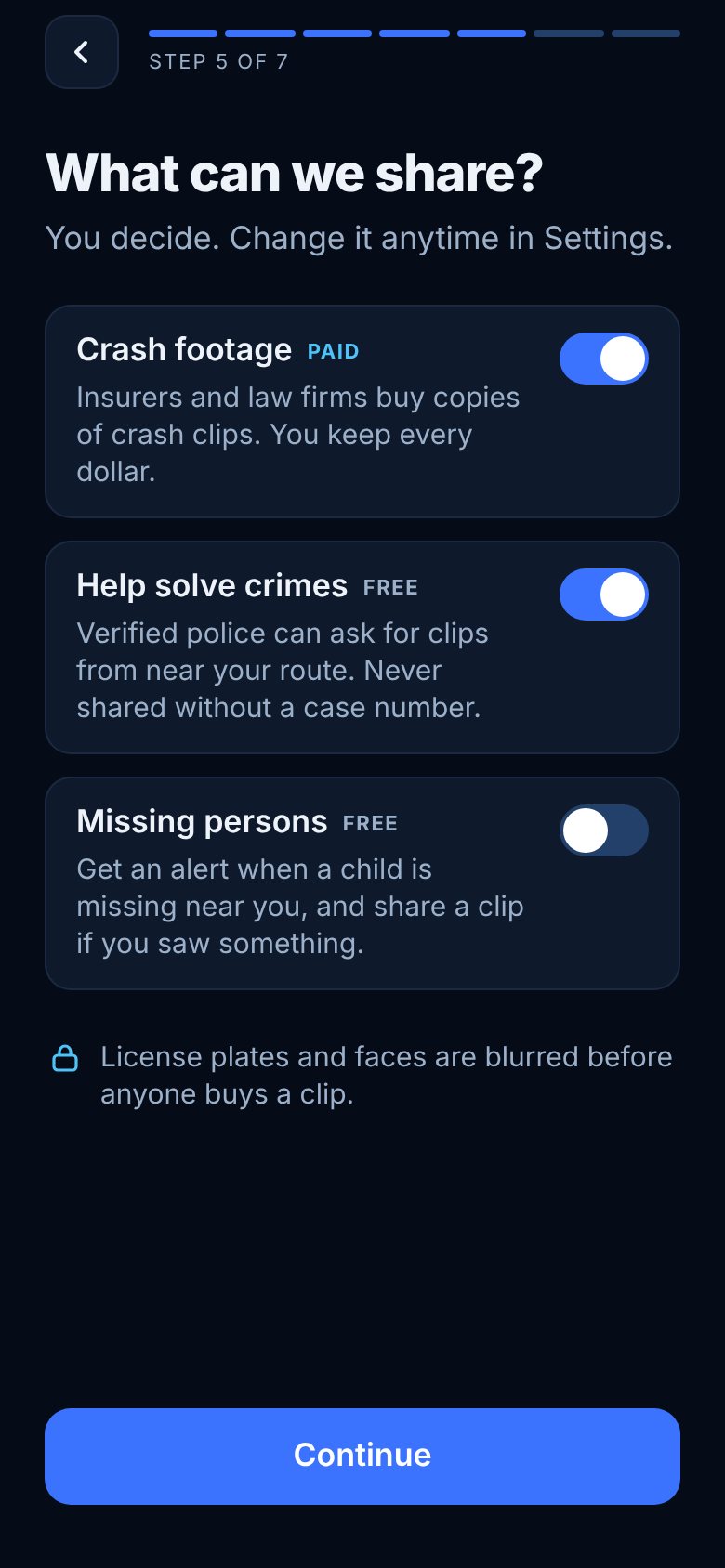
Every clip carries a chain of custody from dashcam to buyer and a downloadable PDF evidence report. Plates and faces are blurred before a clip is listed.
Insurers subscribe. Law firms buy credits
Insurers license footage all the time, so they get a plan with a monthly clip allowance and team seats. A small law firm might need three clips a year, so it buys credits instead: one credit licenses one clip, with no subscription.
Both see the same marketplace and the same verification; only the checkout changes. Drivers keep their full payout, and police and public agencies use it free.
- Insurers
- Law firms
- Drivers
- Police
Showing coverage without exposing drivers
Buyers want to know there are cameras on the road before they sign up. The live map shows dashcams driving through an area alongside recent crashes, simulated in the demo for Downtown Brooklyn.
Driver privacy came first: dots are shifted and delayed 15 minutes, and no names, plates or routes are ever shown.
AI as a research, design and build partner
I used Claude to research the claims market and free public crash data, to test the pricing model against real numbers, and to build the clickable demo from my design boards. I generated the How it works illustrations with Gemini and placed the real app screens into them.
AI sped up the making. The product decisions stayed with me: who pays, how drivers stay private, and what makes a clip trustworthy.
A working demo, built to be tested
The demo is a web app with one link that switches between the driver app, the insurer view and the law firm view, with light and dark themes. The live map is a canvas simulation, downloads return a real video file and a generated PDF evidence report, and the How it works page plays an animated walkthrough with a voiceover.
All names, places and amounts in the demo are sample data.
From a concept to a pilot
The next step is putting the demo in front of adjusters and personal injury attorneys in Connecticut and New York, to learn what they would pay and how much verification they need.
After that come trust levels for clips uploaded from a memory card, connecting the free crash data feeds, testing what payout makes drivers share, and a native app that pairs with popular dashcams.
Evidence is a trust problem before it's a tech problem
Finding the clip is the easy part. The design work was making every party comfortable: drivers who don't want to be tracked, buyers who need to defend the footage, and a pricing model where the people doing the good deed keep what they earn.